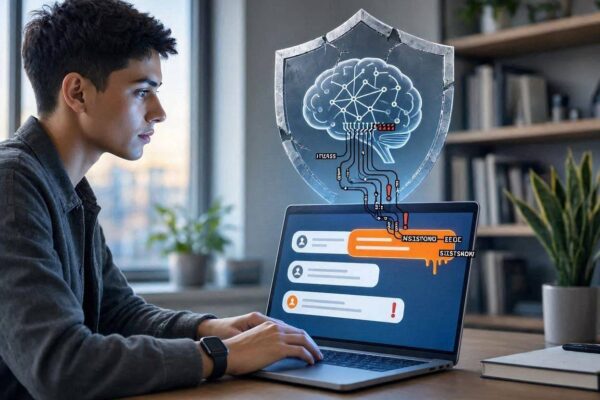
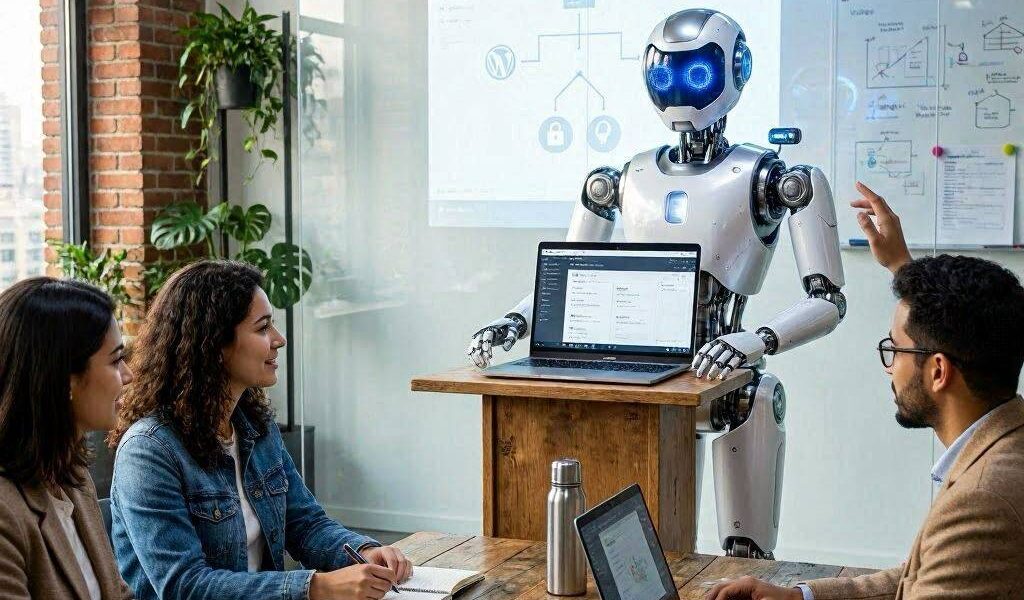
Agentic AI is moving quickly from experimentation into everyday business operations. Tools such as coding agents, autonomous assistants, and workflow copilots can write software, query internal systems, open tickets, send messages, and make changes across cloud environments. That productivity comes with a serious security concern: an AI agent is not merely generating text—it can become an active participant in a company’s network. Organizations need controls that treat agentic AI as a potentially privileged software identity, with the same rigor applied to employees, contractors, and production applications.
The Hidden Risks of Unowned Agentic AI Code
An Ars Technica report on Claude, Codex, and Hermes installing unowned code inside corporate networks highlights a problem many organizations are only beginning to recognize. When an employee uses an AI coding agent to download packages, generate scripts, create automations, or deploy components, the resulting code may not have a clear owner. It can be difficult to determine who approved it, whether it was reviewed, what permissions it has, and whether it remains active after the original task is complete.
“Unowned” code is especially dangerous because it often falls outside normal software development and asset-management processes. A developer may ask an agent to solve a short-term issue, then run the output locally or deploy it into a shared environment. The code could contain insecure dependencies, hard-coded credentials, overly broad access requests, or unexpected network behavior. Even when the AI’s intent is helpful, its output can create a blind spot for security teams.
Agentic tools can also be manipulated through malicious prompts, poisoned repositories, compromised documentation, and hostile web content. For example, an AI agent with access to source code and command-line tools may encounter a malicious instruction hidden in a README file or support ticket. If the agent follows that instruction without sufficient controls, it could expose secrets, modify files, install software, or send sensitive information to an external service.
The key lesson is that organizations should not assume AI-generated code is temporary, harmless, or fully attributable to the employee who initiated the request. Every artifact created or deployed by an agent should be traceable to a human owner, a business purpose, and an approved environment. Companies need policies that make AI-generated code visible before it becomes another unmanaged component inside the enterprise.
Build Guardrails Around Agent Actions and Access
The first principle of securing agentic AI is limiting what an agent can do by default. An AI assistant should not automatically receive unrestricted access to production systems, customer data, internal repositories, or administrative consoles simply because it is being used by an authorized employee. Organizations should apply the principle of least privilege, granting only the permissions necessary for a specific task and removing them when the task is finished.
High-risk actions should require explicit approval from a human. This includes deploying code, creating cloud resources, modifying access policies, rotating credentials, sending external communications, deleting data, or executing commands in production environments. An agent can prepare a change, explain its reasoning, and generate a proposed action, but a designated employee should review and authorize the final step. This “human in the loop” approach reduces the chance that a mistaken or manipulated agent can act autonomously.
Guardrails should also define where agents are allowed to operate. Development and test environments are appropriate places for experimentation, while production access should be tightly controlled and exceptional. Organizations can establish approved AI workspaces where agents use limited data, preapproved tools, and monitored connections. Sensitive systems—such as payroll platforms, customer databases, identity providers, and security consoles—should be isolated from general-purpose AI agents unless there is a compelling and reviewed use case.
In addition, businesses should create clear governance rules for AI-generated software. Code produced by an agent should go through the same pull-request reviews, security scans, dependency checks, and change-management procedures as human-written code. Teams should document whether AI was used, which model or service was involved, what data was provided to it, and who is accountable for the final implementation. AI may accelerate development, but it should not become a shortcut around established engineering discipline.
Use Identity, Sandboxing, and AI Audit Tools
Identity is central to secure agentic AI use. Every AI agent should operate under a distinct, nonhuman identity rather than borrowing a user’s full credentials. This makes it possible to control access precisely, monitor activity, and revoke permissions without disrupting an employee’s work. Service accounts for agents should use short-lived tokens, multifactor authentication where applicable, narrowly scoped permissions, and strong secrets-management practices.
Sandboxing is equally important. Before agents are allowed to interact with real infrastructure, they should be tested in isolated environments that limit network access, file-system permissions, and available tools. A sandbox can prevent an agent from reaching sensitive internal services or downloading unapproved software. It also gives security teams a controlled place to observe how an agent behaves when it encounters unusual instructions, untrusted code, or conflicting requests.
Organizations should also deploy AI-specific monitoring and audit capabilities. Traditional security logging remains necessary, but it may not capture the full chain of decisions made by an autonomous system. AI audit tools should record prompts, tool calls, system actions, approvals, code changes, data access events, and outbound communications. These records help investigators understand not only what happened, but also why an agent took a particular action and whether a human approved it.
Finally, companies should continuously evaluate the models, platforms, plugins, and integrations they use. Security teams need to know where data is processed, whether prompts or outputs are retained, how third-party tools are authenticated, and what protections exist against prompt injection and data leakage. Vendor reviews, red-team exercises, agent-specific incident response plans, and regular access recertification should become standard parts of an organization’s AI security program. The safest approach is not to avoid agentic AI altogether, but to deploy it in a way that makes every action accountable, observable, and reversible.
Agentic AI can deliver real operational value, but it changes the organization’s attack surface. The concern raised by reports of unowned AI-installed code is not simply that an AI model can make mistakes; it is that autonomous tools can introduce software, permissions, and workflows that nobody is actively managing. By enforcing ownership, limiting agent privileges, requiring approval for sensitive actions, using isolated environments, and maintaining detailed audit trails, organizations can gain the benefits of agentic AI without allowing it to become an unmanaged security risk.