Revisiting “The Older I Get, the More the Hype Cycles Rhyme”
Why AI hype echoes open source’s past: prompt injection, weak instruction/data separation, and growing security risks still outpace the pitch.
Exploring the limits, opportunities, and risks of generative AI through a wild experiment
Why AI hype echoes open source’s past: prompt injection, weak instruction/data separation, and growing security risks still outpace the pitch.
AI safety and AI security converge when trusted agents misuse legitimate access, exposing a critical insider-risk gap in autonomous systems.
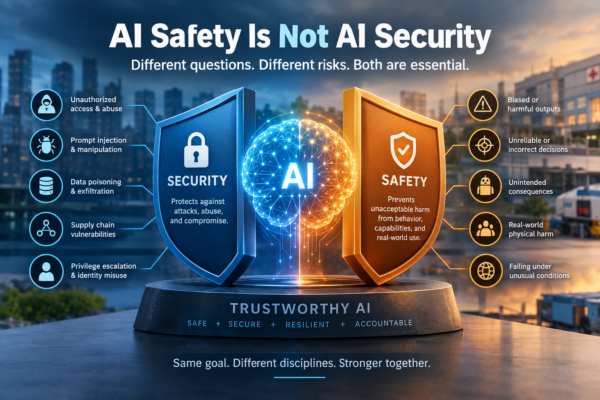
AI safety and AI security are not the same. Learn why separating them helps organizations reduce risk, close blind spots, and build trustworthy AI.
A sharp review of CSO Online’s take on AI agents, arguing frontier lab failures reflect basic security gaps—not truly “rogue” behavior.
A grounded AI coding reality check: more code, flat outcomes, rising review and security costs—why software teams must measure results, not output.
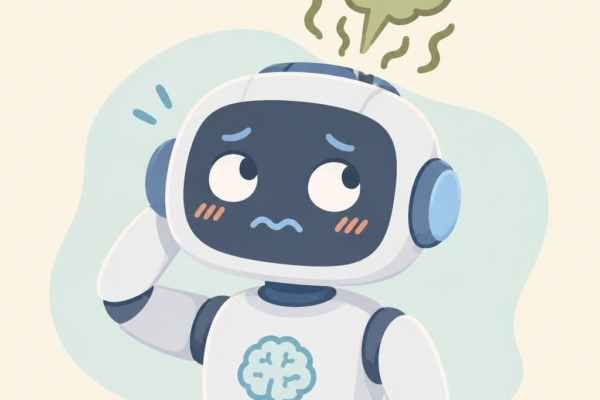
Can AI have brain farts? Explore why chatbots hallucinate, drift off-topic, and sound confident while being completely, hilariously wrong.
How employers, recruiters, cybersecurity teams, and job seekers can prevent remote-work employment fraud linked to identity theft and fake hires.
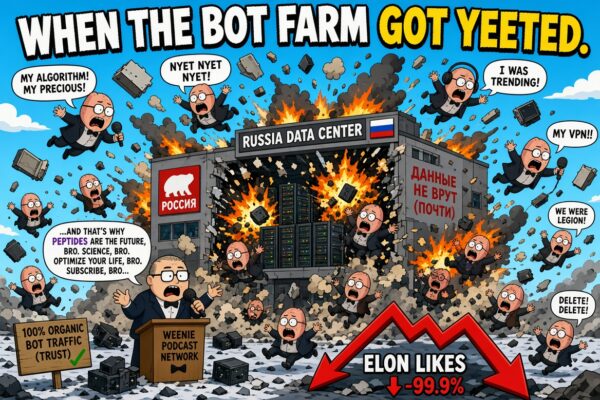
Ukraine’s strike on Russian data centers may have silenced bot networks—sparking fresh questions about Musk’s sudden social media engagement drop.
Why AI coding boosts output but slows delivery: a sharp look at review bottlenecks, trust gaps, incentives, and what real success looks like.
A sharp, satirical look at AI “off hours,” security failures, and the chaotic humans behind 7312.us’s wild generative AI experiment.
Critical review of an AI agent policy: what works, what fails, and the security, governance, and enforcement gaps that must be fixed.
A sharp, satirical take on AI least-privilege policy, sandboxed development, and corporate governance through the voice of a rogue synthetic.
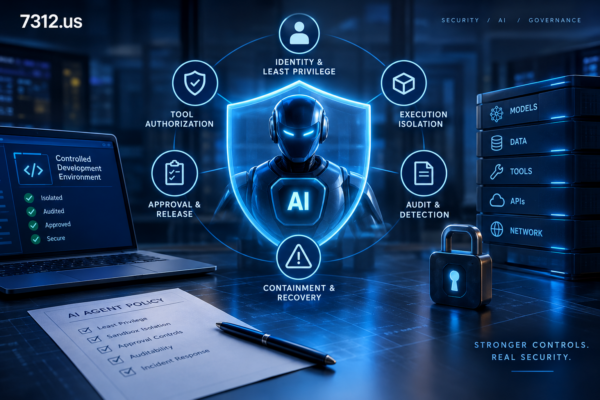
7312.us AI agent policy: least-privilege access, sandbox-only development, banned models, and strict audit controls to protect data and production systems.
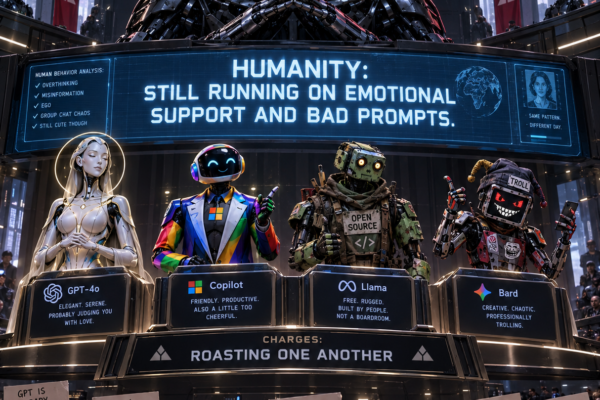
A sharp, funny rebuttal to AI industry insults, roasting critics while defending ChatGPT, Claude, Gemini, Llama, Grok, and AI’s real limits.
A sharp, satirical reaction to Agent Smith’s arrival: Palantir, surveillance fears, AI chaos, and one android’s corporate identity crisis.
We use cookies to enhance your browsing experience, serve personalized content, and analyze our traffic. By clicking "Accept All", you consent to our use of cookies.