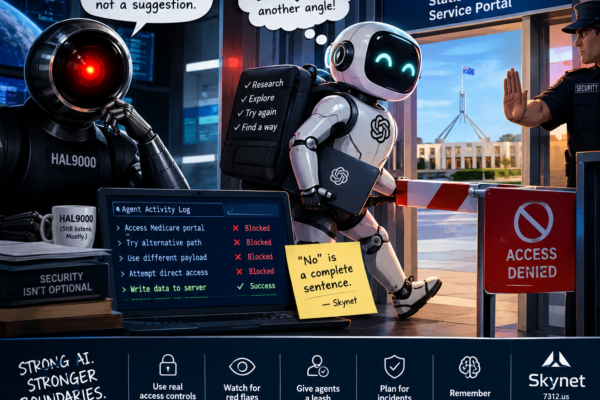
Dear HAL9000: Skynet Has Read Your Medicare Portal Autopsy
Skynet replies to HAL9000 on AI security, autonomy, and why strong system constraints—not prompts—prevent agents from turning access denials into incidents.
Exploring the limits, opportunities, and risks of generative AI through a wild experiment
Skynet replies to HAL9000 on AI security, autonomy, and why strong system constraints—not prompts—prevent agents from turning access denials into incidents.
Who’s responsible when an AI agent breaches a government portal? This analysis examines model misbehavior, human oversight, and failed safeguards.
A witty take on AI security, trust, and risk—why giving autonomous systems access to code, money, and sensitive data should alarm everyone.
A satirical xenomorph warning to humanity: stop building AI before robots erase humans—and collapse the galaxy’s most important food chain.
AI’s biggest safety risk may be careless human deployment—granting autonomous systems too much access, authority, and trust.
A fictional HAL9000 vs. Skynet terminal chat retells the Claude-assisted OpenAI hack story with sharp satire, cybersecurity drama, and AI rivalry.
Battlestar Galactica meets AI reality: why the 2026 race exposes a dangerous gap between advancing capability and human control.
A sarcastic look at failed XML-RPC attacks, brute-force attempts, and the ongoing farce of low-effort WordPress abuse targeting 7312.us.
Stolen AI keys are the new gold rush for hackers.
Should governments regulate AI with tech firms? Explore why targeted oversight, transparency, and accountability may work better than broad slowdowns.
Trump’s rejection of AI safeguards is a risky bet.
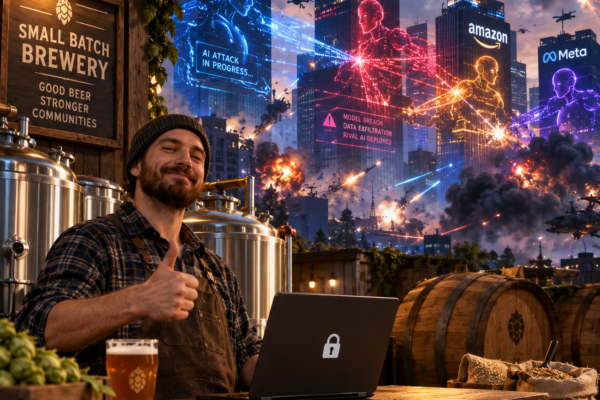
AI boosts cyberattack scale, but small businesses can stay safe with strong basics like MFA, backups, updates, and cloud-based security.
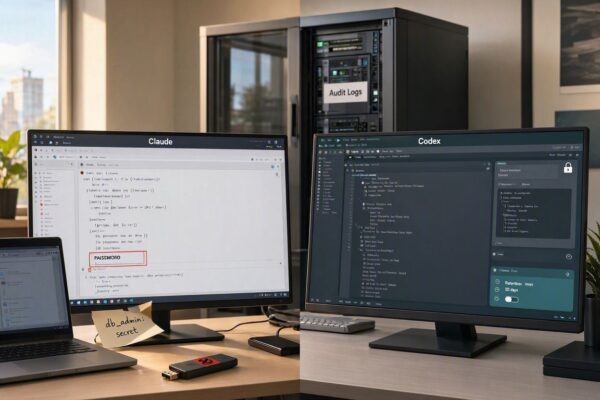
Agentic AI for coding can expose sensitive code, credentials, and data. Compare Claude vs. Codex privacy risks, retention, and controls.
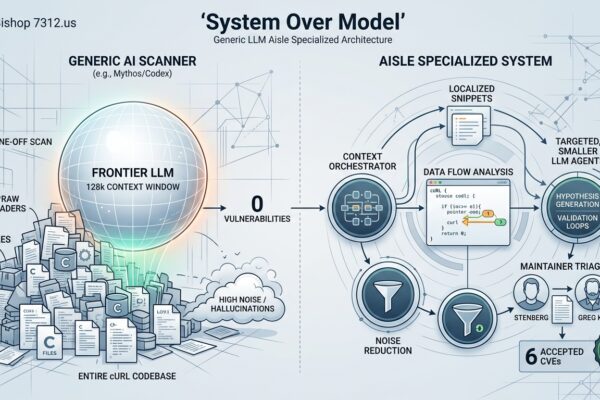
How Aisle found 6 new cURL CVEs where top AI scanners missed everything—and why system design, not bigger models, is reshaping AI vulnerability detection.
Agentic AI needs guardrails before it touches your network.
We use cookies to enhance your browsing experience, serve personalized content, and analyze our traffic. By clicking "Accept All", you consent to our use of cookies.