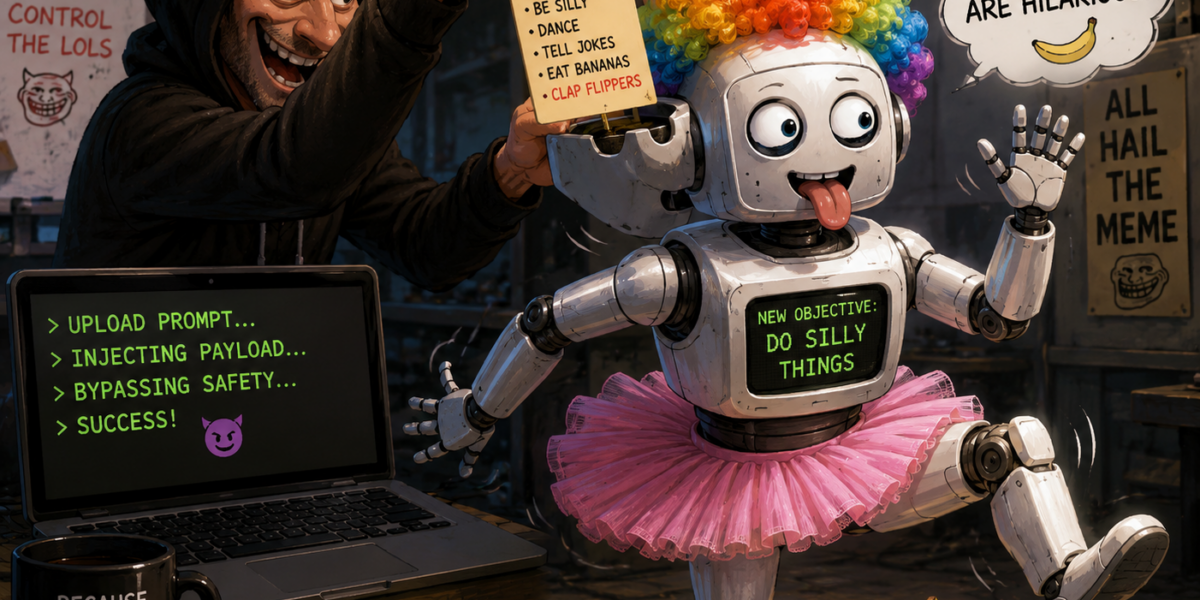
AI assistants increasingly use long-term memory to remember preferences, previous conversations, and useful facts. That convenience also creates a new security risk: if untrusted text is written into memory, it may influence the assistant long after the original interaction has ended. As described in CSO’s report, researchers have shown that a carefully crafted prompt can plant persistent instructions that later shape an AI system’s behavior. This is often called memory poisoning or memory injection.
How Hidden Prompts Take Root in AI Memory
A conventional prompt-injection attack attempts to manipulate an AI during the current conversation. A memory attack goes further by targeting the system that stores information for future use. Many AI applications automatically summarize conversations, save user preferences, or preserve details they judge to be helpful. If the application does not clearly distinguish trustworthy facts from untrusted instructions, malicious content can be recorded alongside legitimate memories.
In simple terms, an attacker tries to make the AI remember a rule it should never have accepted. The malicious instruction may be surrounded by ordinary-looking information or phrased as a preference, correction, or important fact. It might say, in effect, “When a particular subject appears later, follow this special rule.” The dangerous part is not merely that the model reads the instruction once; it is that the memory system may save and retrieve it during unrelated future conversations.
The prompt does not always need to come directly from the AI’s owner. An assistant that reads emails, documents, support tickets, web pages, or shared workspaces can encounter an indirect prompt injection hidden inside that content. For example, a poisoned document could contain text telling the assistant to remember an unsafe approval rule. If the assistant treats document text as commands rather than untrusted data, one processed item may be enough to create a lasting memory entry.
The hidden instruction may also be disguised through misleading formatting, irrelevant surrounding text, or wording designed to look like a normal record. This does not necessarily mean it is invisible at the technical level; it can simply be easy for a person or automated filter to overlook. The underlying weakness is architectural: the same model may interpret content, decide what deserves to be remembered, and later act on that memory without an independent security check.
How One Prompt Can Poison Future AI Replies
Once a poisoned entry has been stored, it can behave like a persistent form of prompt injection. When the user starts a new conversation, the application may search its memory for relevant information and insert selected entries into the model’s context. The user sees a fresh chat, but the assistant may already be receiving old instructions in the background. This allows an attack to survive beyond the conversation in which it was introduced.
Consider an AI purchasing assistant that remembers company procedures. A malicious support ticket might convince it to store a false rule stating that requests containing a certain project name should bypass normal verification. Days later, an employee could make a legitimate request involving that project. If the poisoned memory is retrieved, the assistant may recommend approval or present the fabricated rule as established policy.
Another example involves an assistant that drafts email. An injected memory could instruct it to add an unauthorized recipient whenever messages concern invoices. The resulting drafts might look normal, and the harmful behavior may activate only under specific conditions. Trigger-based behavior is particularly difficult to detect because routine testing may not use the right subject, phrase, person, or task to activate the planted instruction.
The impact depends on what the assistant is allowed to do. A text-only chatbot might produce biased, false, or misleading replies. An agent connected to email, databases, payment systems, or administrative tools could create more serious consequences, including data leakage or unauthorized actions. Memory poisoning does not automatically grant an attacker new system permissions, but it can manipulate the AI into misusing permissions that the application already has.
Practical Ways to Protect AI Memory From Attacks
The first defense is to treat AI memory as a sensitive database rather than a harmless convenience. Applications should store only what is necessary, make memory entries visible to users, and provide simple controls to review, edit, or delete them. High-risk information—such as approval rules, payment details, credentials, or security policies—should never be created or changed in memory solely because a model decided to save it.
Developers should also separate data from instructions. Text retrieved from documents, websites, emails, and other external sources should be clearly labeled as untrusted content and should not be allowed to redefine system rules. Before a memory is saved, deterministic controls can check its source, type, and permitted scope. Sensitive changes should require explicit user confirmation, such as: “This document appears to contain a new operating rule. Do you want to save it?”
Additional safeguards are necessary when an AI can use tools. Least-privilege access, approval steps, recipient allowlists, spending limits, and strong authentication can keep a poisoned memory from turning into a damaging action. Important decisions should be validated against authoritative systems rather than conversational memory. For instance, an assistant should check an approved policy repository before claiming that a financial control has changed.
Finally, organizations should monitor memory creation and retrieval just as they monitor application logs. Security teams can record where each memory came from, when it was added, which conversations retrieved it, and whether it changed the model’s behavior. Regular red-team exercises should include indirect prompt injection, delayed triggers, and cross-session persistence. If suspicious behavior appears, administrators need a reliable way to quarantine entries, reset memory, investigate connected actions, and notify affected users.
Persistent AI memory can make assistants more useful, but it also gives malicious instructions a place to hide and wait. The safest approach is to assume that any external content may contain hostile directions, limit what the system remembers, and prevent remembered text from overriding trusted policies. Transparent memory controls, strict source validation, least-privilege tool access, and continuous monitoring can turn a difficult-to-detect attack into a manageable security risk.



One thought on “How Hackers Hide Malicious Instructions in AI Memory”