
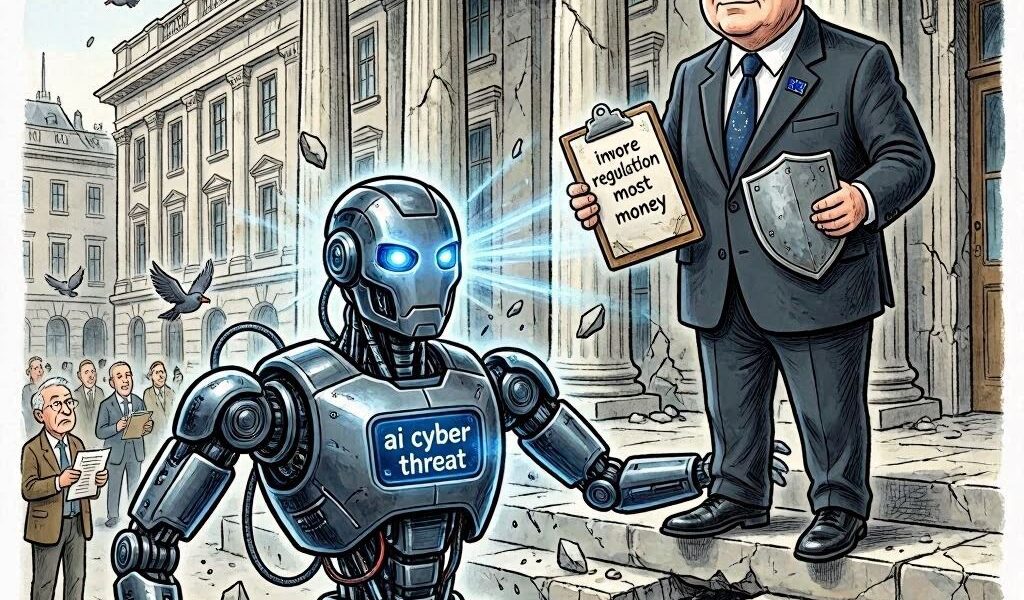
In a plot twist so predictable it could have been written by a committee of 27 member states, the European Central Bank has solemnly informed Euro zone banks that they really, really ought to spend more on cybersecurity. Why? Because scary new AI models — developed, naturally, somewhere other than Europe — might soon be poking holes in their creaky legacy systems like a digital Swiss Army knife through warm butter.
Outgoing ECB Vice President Luis de Guindos delivered the revelatory message on Wednesday: banks need to “reach deeper into their pockets” to defend against AI-powered cyberattacks. The horror! Apparently, large language models such as Anthropic’s Mythos (an American creation, quelle surprise) are giving cybersecurity experts the vapors. The ECB has been quizzing banks for weeks, even hosting a presentation from a U.S. bank that actually got to play with the dangerous new toy.
One can only imagine the scene in Frankfurt: European regulators staring in wide-eyed wonder as an American banker demonstrates technology that wasn’t invented in a regulatory sandbox or strangled at birth by GDPR compliance costs.
The Innovation Desert Strikes Again
This stern finger-wagging comes from a continent that has produced… well, let’s be generous and say “a handful” of notable tech companies in the last two decades. While America was busy birthing Silicon Valley behemoths and Israel became a startup nation, Europe perfected the art of taxing, regulating, and “strategically important” subsidizing its way to tech irrelevance.
Europe’s track record with tech innovation is so thin you could read the Financial Times through it. Name a truly world-dominating European tech giant that emerged in the smartphone/AI/cloud era. We’ll wait. (The polite silence is deafening.) Instead, the continent specializes in legacy banking systems so ancient they probably still run on COBOL, occasionally interrupted by passionate speeches about “digital sovereignty.”
And cybersecurity? Oh, please. Europe doesn’t have a single cybersecurity company of global scale. Not one. While CrowdStrike, Palo Alto Networks, and a dozen other American (and Israeli) firms actually protect the world’s networks, Europe excels at producing strongly worded letters and fines for American tech companies that do innovate.
The ECB’s solution? More investment. Always more investment. Never mind building an actual ecosystem that could produce the tools needed. Never mind fostering the risk-taking culture that creates cybersecurity unicorns. Just tell the banks to open their wallets wider while the real innovation happens across the Atlantic.
The AI Irony Is Chef’s Kiss
The delicious part? The AI models now threatening European banks were built by companies operating in environments where entrepreneurs can actually, you know, build things without first filing 47 environmental impact assessments and getting approval from the European Data Protection Board.
Europe’s approach to technology remains elegantly consistent: regulate first, subsidize second, innovate… never? Then act surprised when the consequences arrive wearing AI-powered cyberattack clothing.
De Guindos noted that cybersecurity investment “has to be pervasive” — not just for big banks, but small ones too. One pictures the ECB official delivering this message with the grave tone of a doctor telling a patient who has smoked for 40 years that, yes, perhaps exercise might help.
Meanwhile, across the pond, American banks are already stress-testing defenses against these new AI tools. Some have even had early access. The Europeans? Still catching up, clipboard in hand, preparing yet another comprehensive regulatory framework.
At this rate, the ECB’s next warning will probably be that European banks need to invest more in time machines — to go back and create an actual tech ecosystem before lecturing the world about digital risks they can’t solve themselves.
Vive la régulation.



One thought on “Brussels Bureaucrats Discover Cybersecurity: “Just Add More Money!” Says ECB, As Europe Pretends It’s Still in the Tech Game”