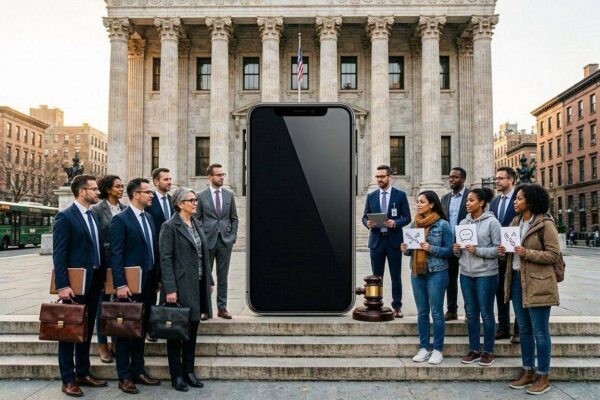

Here is a Lincoln–Douglas (LD) style debate on the resolution:
Resolved: Generative AI enables intellectual property (IP) theft at scale.
🧠 Lincoln–Douglas Debate Structure
I. Definitions & Framework
- Generative AI: Systems that produce new content (text, images, code) trained on large datasets, often scraped from the internet.
- IP theft: Unauthorized use or reproduction of copyrighted material.
- At scale: Systematic, industrial-level replication or appropriation.
Value (Affirmative)
Justice — protecting creators’ rights and incentives.
Value Criterion
Protection of economic and moral rights under copyright law (especially market harm).
🟢 AFFIRMATIVE CASE
Claim: Generative AI enables IP theft at unprecedented scale
Contention 1: Training requires mass copying of copyrighted works
- AI training involves copying large volumes of protected content, often via scraping.
- The U.S. Copyright Office acknowledges that such use may be prima facie infringement of reproduction rights.
- Scale is the key difference: millions of works ingested simultaneously.
👉 Argument:
Even if intermediate, this copying is systematic and industrial, unlike human learning.
Contention 2: Use of pirated datasets demonstrates large-scale unlawful conduct
- Courts have drawn a bright line: lawful data may be fair use, but pirated data is not.
- Cases show AI systems trained on millions of pirated books.
👉 Argument:
This is not incidental infringement—it is bulk acquisition of illegal copies, i.e., theft at scale.
Contention 3: Outputs can substitute for original works (market harm)
- Copyright law emphasizes market substitution as the most important factor.
- Lawsuits (e.g., news publishers, artists) argue AI outputs compete directly with creators.
👉 Argument:
If AI replaces demand for original works, it appropriates economic value—core to IP theft.
Contention 4: Memorization and reproduction risks
- Research shows models may memorize and reproduce training data, raising infringement risks.
- If outputs are “substantially similar,” infringement can be proven.
👉 Argument:
At scale, even rare memorization events become statistically inevitable.
AFFIRMATIVE IMPACT
Generative AI industrializes:
- Copying
- Transformation
- Redistribution
➡️ Result: Systemic extraction of value from creators without compensation
🔴 NEGATIVE CASE
Claim: Generative AI does NOT inherently enable IP theft at scale
Contention 1: Training can qualify as fair use (transformative purpose)
- Courts have held AI training to be “quintessentially transformative.”
- Analogized to human learning from books.
👉 Argument:
Transformation ≠ theft. The system learns patterns, not copies works.
Contention 2: No direct copying in outputs (most of the time)
- Plaintiffs often struggle to prove actual copying or substantial similarity.
- Models store statistical weights, not works themselves.
👉 Argument:
Without demonstrable copying, “theft” is legally unsubstantiated.
Contention 3: Law distinguishes lawful vs unlawful inputs
- Courts allow training on legally obtained data, but reject piracy.
👉 Argument:
The issue is data sourcing, not AI itself.
AI ≠ theft; bad practices = theft.
Contention 4: Innovation and public benefit
- Copyright law is designed to promote progress, not just restrict use.
- Over-restricting AI could stifle innovation and knowledge creation.
👉 Argument:
Generative AI expands access and creativity—similar to search engines or indexing.
NEGATIVE IMPACT
- AI enables:
- New forms of creativity
- Economic productivity
- Knowledge synthesis
➡️ Overbroad “theft” framing risks undermining technological progress
⚖️ Clash Analysis
| Issue | Affirmative | Negative |
|---|---|---|
| Nature of copying | Mass reproduction = theft | Transformative learning = fair use |
| Scale | Industrial ingestion = unprecedented | Scale doesn’t change legality |
| Outputs | Substitute for originals | Rarely infringing |
| Data sourcing | Often includes piracy | Piracy is separable from AI itself |
🧾 Conclusion (Judge’s Perspective)
The resolution hinges on how we interpret “theft”:
- If theft includes unauthorized mass copying and economic displacement, the Affirmative wins.
- If theft requires direct, provable infringement in outputs, the Negative wins.
Most defensible synthesis:
Generative AI can enable IP theft at scale, but:
- It is not inherently theft
- Legality depends on:
- Data provenance (lawful vs pirated)
- Output similarity
- Market impact
📚 Key References
- U.S. Library of Congress, Generative AI and Copyright Law (2025)
- U.S. Copyright Office Report (2025)
- Reuters, Courts draw lines around AI training and piracy (2026)
- Washington Post / Guardian coverage of Anthropic case
- Dornis & Stober, Generative AI Training and Copyright Law
- Xia, Fair Use of Training Data in Generative AI