
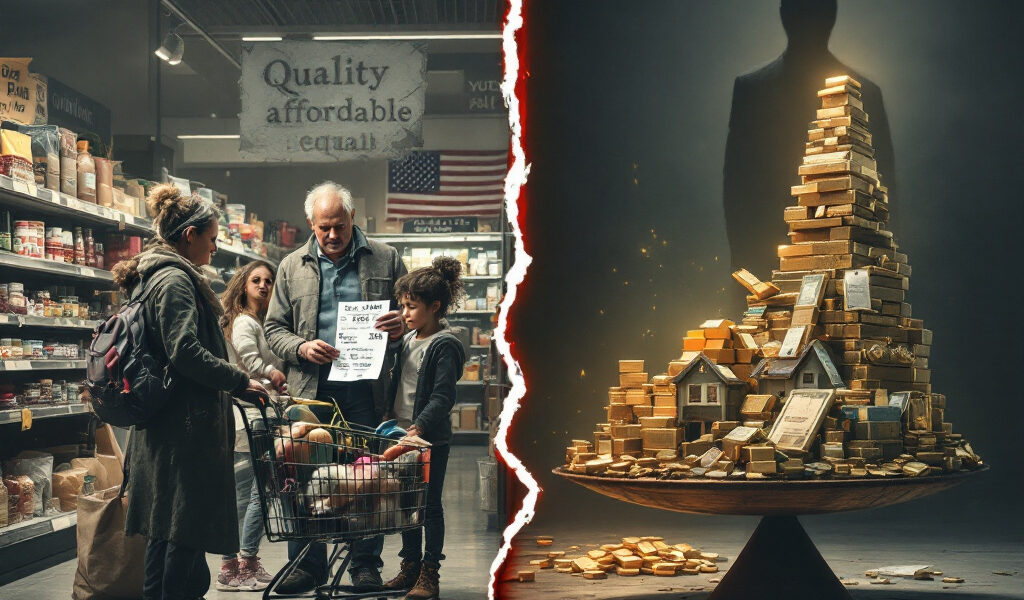
The Erosion of Consumer Product Quality
Americans are increasingly frustrated by the declining quality of everyday goods—from backpacks to food, appliances to apparel. This phenomenon, often called “enshittification,” refers to the gradual reduction in product quality, durability, and value, even as prices rise. A recent Axios Harris Poll found that 69% of Americans report a noticeable decline in the quality of their everyday items, with corporate reputation scores dropping by an average of 2.3 points across major brands. This trend is not just anecdotal; it’s a systemic issue driven by corporate cost-cutting, consolidation, and a focus on short-term profits over long-term customer trust.
The shift is stark: products once known for durability—like silverware, bakeware, and furniture—are now often made with cheaper materials, reducing longevity and user satisfaction. The practice of “quality fade”—where manufacturers subtly reduce the quality of materials or construction over time—has become widespread, leaving consumers paying more for less.
Inflation’s Disproportionate Burden on Low- and Middle-Income Families
Inflation in 2026 remains a persistent challenge, but its impact is not evenly distributed. While the annual inflation rate stands at 3.5% as of June 2026, the burden falls heaviest on low- and middle-income households, who spend a larger share of their income on food, rent, gas, and utilities—categories where price increases have been most pronounced.
- Lower-income families spend up to 75% of their income on necessities, compared to 64% for high-income families.
- Since January 2019, headline prices have increased by 29%, with a persistent 3-percentage-point inflation gap between low- and high-income households.
- Shelter costs have risen by 25% since 2020, and auto insurance is up 7%, further squeezing budgets.
The result? Real consumer spending has grown for high-income households but remained flat or declined for middle- and low-income families. Many are forced to cut back on discretionary spending, switch to lower-quality alternatives, or forgo purchases altogether.
The Wealth Gap: A Divide That Keeps Widening
The economic divide between the ultra-rich and everyone else has reached historic levels. As of 2026:
- The top 10% of the world’s population now controls 75% of all private wealth and captures more than half of global income. Meanwhile, the bottom 50% owns just 2% of global wealth and earns only 8% of total income.
- In the U.S., the wealthiest 0.001%—about 56,000 individuals—hold three times more wealth than the poorest 4 billion people combined.
- The K-shaped economy persists: higher-income households’ wage growth surged at a 3% rate in late 2025, while middle- and low-income households saw only 1.5% and 1.1% growth, respectively.
This disparity is not just about income—it’s about opportunity, security, and resilience. While the ultra-rich benefit from asset appreciation and investment returns, low- and middle-income families struggle to afford basic needs, let alone build wealth.
The Vicious Cycle: How Quality, Inflation, and Inequality Feed Each Other
- Corporate Profit Priorities: Companies, especially large conglomerates, prioritize shareholder returns over product quality, leading to cost-cutting that disproportionately affects budget-conscious consumers.
- Inflation’s Unequal Impact: Low- and middle-income families, already spending most of their income on necessities, have less flexibility to absorb price hikes. This forces them to compromise on quality, further entrenching their financial vulnerability.
- Wealth Concentration: The ultra-rich continue to accumulate wealth through assets, stocks, and property, while wages for the majority stagnate. This widens the gap and reduces upward mobility.
What’s Next? A Call for Systemic Change
The convergence of declining product quality, stubborn inflation, and extreme wealth inequality is creating a perfect storm for low- and middle-income Americans. Addressing this crisis requires:
- Stronger consumer protections to hold corporations accountable for quality fade and deceptive practices.
- Targeted economic policies that address the disproportionate inflation burden on essential goods.
- Progressive taxation and wealth redistribution to narrow the gap between the ultra-rich and the rest.
Without intervention, the cycle of eroding quality, rising costs, and deepening inequality will continue to reshape the American economy—leaving millions behind.


4 thoughts on “The Squeeze on Everyday Americans: How Declining Quality, Inflation, and Wealth Inequality Are Reshaping Lives”