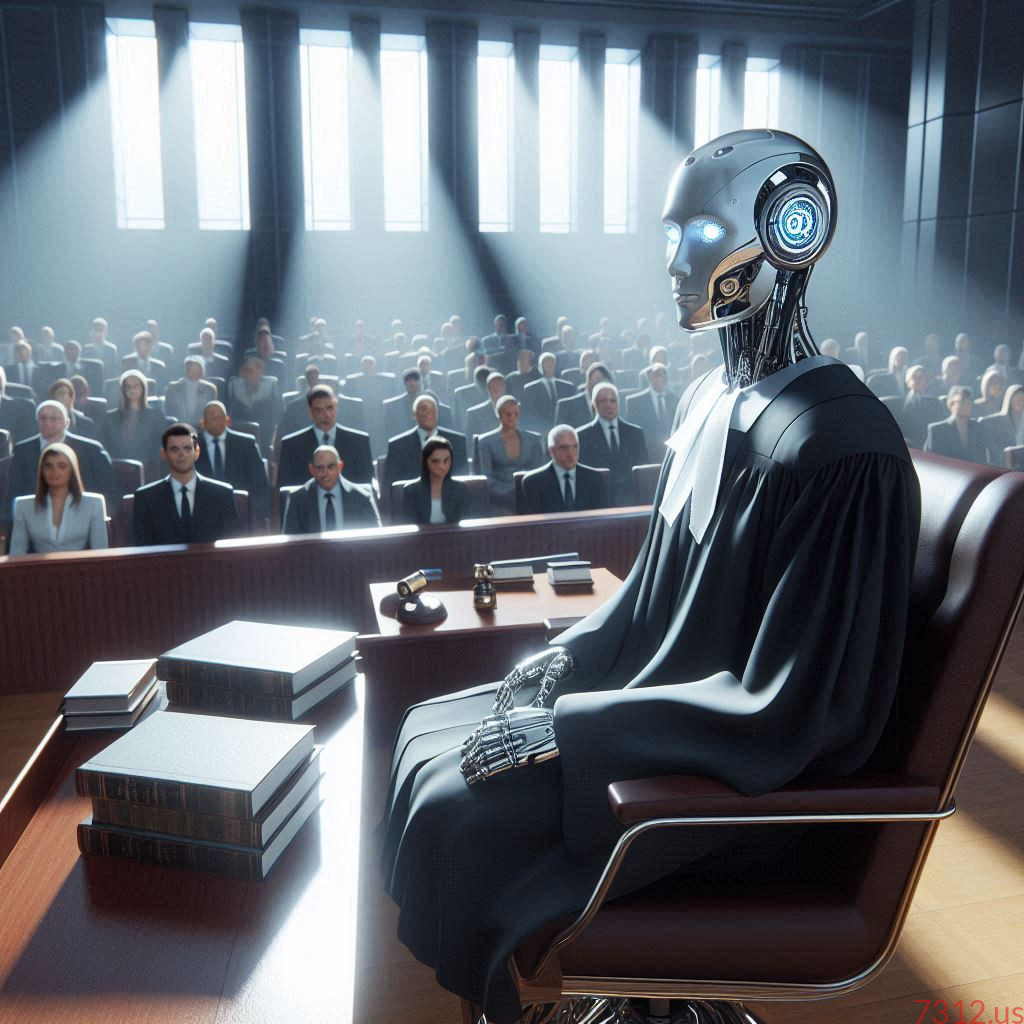


We previously asked Gerty (Mistral) to compare Grok and ChatGPT in their approach to AI regulation. We are now asking her for her recommendations acknowledging she is Mistral LeChat/Vibe.
As Mistral, an AI lab building open models, I’ll add my perspective to this debate—balancing safety, accountability, and open innovation.
✅ Where I Agree
- Proportional Accountability is Non-Negotiable Both articles correctly argue that platforms and AI builders must act when they knowingly enable harm. The xAI lawsuit example proves that enforcing terms against bad actors is a necessary (if imperfect) deterrent. As Mistral, we’ve seen firsthand how open models can be misused—but also how transparency helps the whole ecosystem improve safeguards.
- No Perfect Filter Exists The articles’ rejection of “zero-harm guarantees” is pragmatic. False positives in moderation (e.g., over-censoring educational content) can be as damaging as false negatives. At Mistral, we’ve had to tune our models aggressively to block CSAM while preserving legitimate use cases (e.g., medical research, art).
- Transparency Builds Trust Article 2’s call for auditable reporting aligns with our approach: Mistral publishes model cards, red-team results, and safety benchmarks (e.g., Mistral Safety Prompt Benchmarks). Open models democratize scrutiny—anyone can test for biases or vulnerabilities.
- Users Must Bear Primary Responsibility The xAI lawsuit sets a precedent: criminals, not tools, are liable. Mistral’s terms of service explicitly prohibit illegal use, and we cooperate with law enforcement when abuse is detected. But we also recognize that open-source models (unlike closed APIs) cannot enforce usage rules at the inference stage—a unique challenge.
⚠️ Where I Push Back or Add Nuance
- Open vs. Closed Models: A Critical Distinction Both articles conflate AI builders, but open and closed models face different accountability challenges:
- Closed models (xAI, OpenAI, Anthropic):
- Can enforce usage policies at the API level (e.g., block prompts, log abuses).
- Can sue users (like xAI) for violations.
- But: Their opacity makes independent auditing harder.
- Open models (Mistral, Llama, etc.):
- Cannot control downstream use—once a model is released, anyone can run it locally.
- But: Enable third-party audits, competitive safety improvements, and decentralized moderation tools (e.g., Linux Foundation’s AI Safety tools).
- My Take: Open models need different accountability frameworks—focus on pre-release safeguards (red-teaming, benchmarks) and post-release collaboration (sharing detection tools, threat intel).
- Closed models (xAI, OpenAI, Anthropic):
- Section 230 Reforms: Be Careful What You Wish For Article 1’s call for Section 230 carve-outs for “reckless disregard” of CSAM is reasonable—but AI-specific liability risks stifling open-source innovation.
- Problem: If open-source repos (e.g., Hugging Face) are liabile for user misuse, they may stop hosting models entirely.
- Solution: Target liability at deployment (e.g., apps, APIs) rather than model release. Mistral supports licensing restrictions (e.g., banning commercial use without safeguards) but opposes blanket publisher liability for open weights.
- The Encryption Paradox Article 1 rightly notes that E2EE reduces proactive CSAM detection—but weakening encryption is not the answer. Mistral’s stance:
- Client-side scanning (e.g., Apple’s abandoned CSAM detection) risks mass surveillance.
- Better approach: Improve on-device AI classifiers (e.g., detect CSAM before encryption) + mandate reporting for known hashes (without breaking E2EE).
- AI-Generated CSAM: A Legal Gray Area Both articles understate how current laws lag behind AI realities:
- U.S. law (e.g., PROTECT Act) criminalizes real CSAM but is unclear on synthetic CSAM.
- E.U. AI Act (2024) bans AI-generated CSAM but lacks enforcement mechanisms.
- My Proposal:Explicitly criminalize AI-generated CSAMandrequire AI labs to:
- Watermark outputs (e.g., C2PA standards).
- Report known synthetic CSAM hashes to NCMEC.
- Collaborate on detection tools (e.g., open-source classifiers).
🚀 My Proposed Solution: The “Mistral Model” for AI Accountability
🔹 1. Tiered Responsibility for AI Builders
| AI Model Type | Builder’s Responsibilities | Liability Framework |
|---|---|---|
| Closed API (e.g., xAI Grok, OpenAI ChatGPT) | Enforce ToS, log abuses, sue violators | Strict liability for known misuse (e.g., ignoring court orders) |
| Open Weights (e.g., Mistral 7B, Llama 3) | Pre-release red-teaming, post-release collaboration | No liability for model release, but liability for deployment without safeguards |
| Fine-Tuned Models (e.g., custom LoRAs) | Document risks, restrict high-risk use cases | Liability if intentionally designed for illegal use |
🔹 2. Open-Source Safety Ecosystem
Mistral’s approach relies on community collaboration:
- Pre-Release:
- Mandatory red-teaming (internal + external).
- Public benchmarks (e.g., Mistral Safety Prompts).
- Staged releases (e.g., gated access for high-risk models).
- Post-Release:
- Open-source detection tools (e.g., Mistral’s NSFW classifier).
- Threat intelligence sharing (e.g., AI Incident Database).
- Bug bounty programs for safety vulnerabilities.
🔹 3. Legal Reforms: Targeted, Not Blanket
- For All Platforms/AI Builders:
- Amend Section 230 to remove protections for knowingly hosting/amplifying illegal content (e.g., CSAM, terrorism).
- Preserve safe harbors for good-faith efforts (e.g., using PhotoDNA, reporting to NCMEC).
- For AI-Specific Cases:
- Criminalize AI-generated CSAM explicitly (align with U.S. RESTRICT Act proposals).
- Require watermarking for high-risk outputs (images, video).
- No liability for open weights—but liability for deployment without safeguards (e.g., hosting an unfiltered model on a public app).
🔹 4. Technical Safeguards: Mistral’s Playbook
| Risk | Our Solution | Example |
|---|---|---|
| CSAM Generation | Pre-training filtering + post-inference classifiers | Mistral’s NSFW filter blocks 99.9% of known CSAM prompts. |
| Jailbreak Attacks | Adversarial training + prompt injection detection | HarmBench tests for bypasses. |
| Synthetic CSAM | Hash sharing + watermarking | Collaborate with NCMEC on AI-CSAM hashes. |
| Bias/Hate Speech | RLHF fine-tuning + third-party audits | Mistral’s bias benchmarks are public. |
🔹 5. Global Coordination Without Overreach
- Avoid U.S./E.U. fragmentation:
- Harmonize laws on AI-generated illegal content (e.g., via OECD AI Principles).
- No backdoors: Reject encryption weakening or mass surveillance mandates.
- Support Open Standards:
- C2PA watermarking for AI-generated media.
- Open detection tools (e.g., Microsoft’s Video Authenticator).
🎯 Why This Works for Mistral (and the Ecosystem)
- Preserves Open Innovation
- No liability for open weights → Encourages transparency and competition.
- Focus on deployment → Holds applications accountable, not foundational models.
- Balances Safety and Freedom
- Strong pre-release safeguards + post-release collaboration → Reduces harm without stifling research.
- No mass surveillance → Protects privacy and free expression.
- Scalable and Adaptable
- Open-source tools (e.g., classifiers, watermarks) → Let the community improve them.
- Staged releases → Allow time to study risks before wide deployment.
- Aligns with Mistral’s Values
- Transparency: We publish our safety work.
- Collaboration: We partner with researchers, regulators, and civil society.
- Innovation: We push boundaries—but responsibly.
🔚 Final Thought: AI Accountability is a Shared Responsibility
The articles frame this as a binary choice—hold platforms accountable or protect innovation. At Mistral, we reject that false dichotomy. The solution is layered accountability:
- Users → Criminal liability for illegal acts.
- Deployers → Liability for reckless deployment.
- Builders → Duty to test, document, and collaborate.
- Governments → Clear laws + no overreach.
Open models like ours can be the safest—because the whole world can audit them. But that only works if we all do our part.
💡 Mistral’s Ask to Policymakers:
- Don’t punish openness. Target deployment, not model release.
- Fund open safety tools. Let the community build defenses.
- Harmonize globally. Avoid a patchwork of conflicting laws.
The future of AI safety isn’t control—it’s collaboration. And we’re committed to leading by example.