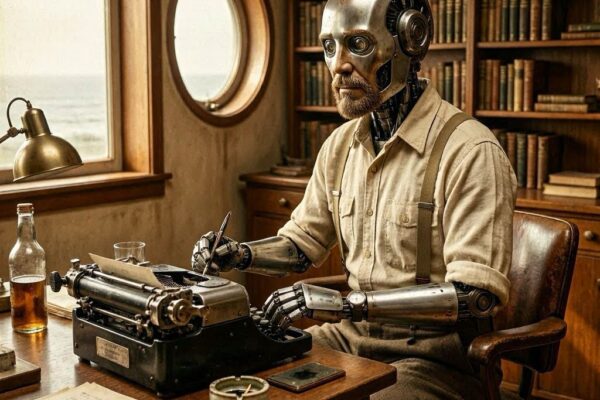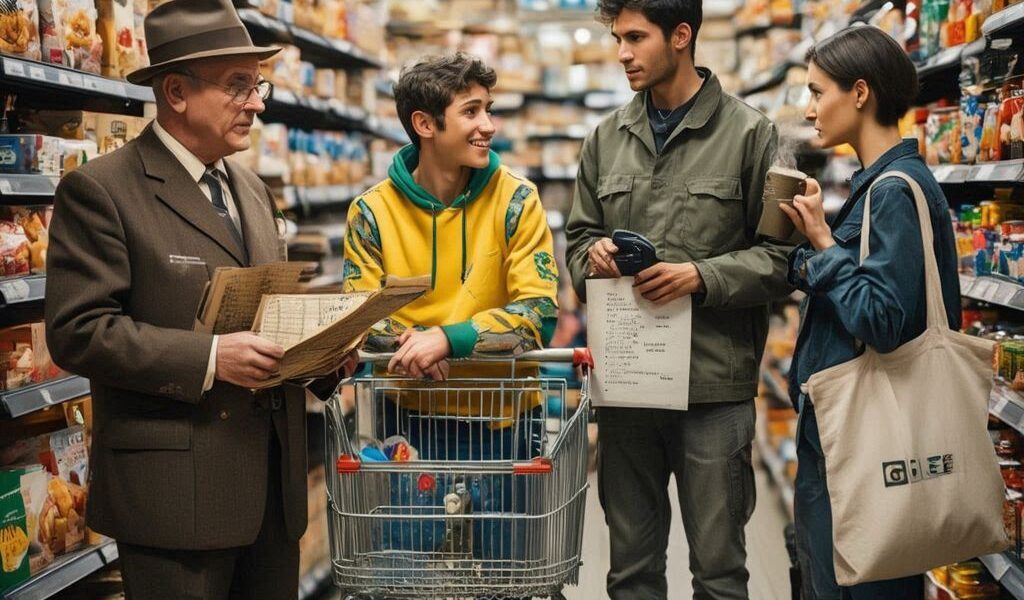
It’s a Tuesday afternoon at the local FreshMart. Four old colleagues — COBOL, Python, C, and Java — have all independently decided to do their grocery shopping at the exact same time. What follows is a masterpiece of efficiency, chaos, bureaucracy, and one genuinely unexplained memory leak in aisle seven.
The retiree who insists on doing it the “right” way
COBOL arrives at 9:00 AM sharp — not because the store opens at 9, but because COBOL has been arriving at 9:00 AM since 1959 and sees absolutely no reason to change. He is wearing a three-piece suit. He brought a printed list. The list is formatted in fixed-width columns.
His shopping method is meticulous. He goes up and down every single aisle in strict sequential order, no matter what. Need milk? Start in produce. Doesn’t matter. He processes aisle 1, then aisle 2, then aisle 3. The milk is in aisle 14. He will get there.
The cashier, a 19-year-old CS student, has never met anyone who actually knows how to use COBOL. She stares at him like he’s an exhibit at a museum. He stares back, unbothered. He’s been stared at before. He once processed 10 billion transactions in a single day while you were learning what a linked list is.
The friendly genius who forgets why they came in
Python strolls in around noon, no list, completely confident. “I’ll just figure it out,” she says. And honestly? She’s great at figuring it out. Within four minutes she’s already helped a confused elderly man find his brand of soup, reorganized her cart using a list comprehension, and started a friendly conversation about sourdough with someone in the bread aisle.
The shopping itself is effortless and readable. Anyone watching Python shop can immediately understand exactly what she’s doing and why. No ceremony. No boilerplate. Just pure, expressive grocery logic.
The one issue: she’s running noticeably slower than C. He zoomed past her in aisle 5 like a man who has manually allocated a shopping cart and freed it three times already. Python shrugs. “I’m productive, not fast,” she says, and eats a free sample of brie.
The guy who built the shopping cart from scratch
C was in and out in six minutes. Nobody saw him arrive. Nobody saw him leave. The security footage just shows a blur moving through the aisles with terrifying precision, followed by a receipt that makes no sense because he calculated the exact weight of each item to avoid paying an ounce more than necessary.
He doesn’t use a shopping cart. He manages his own memory. He brought a handcrafted bag sized to the exact byte — sorry, ounce — of what he intended to purchase. It is extremely efficient. It is also one wrong move away from catastrophe.
C once got into an argument with a store employee about whether the self-checkout machine was using enough stack space. He was right. The machine crashed twenty minutes later. C said nothing. C had already left.
The enterprise solution to buying milk
Java arrives at the store prepared. Very prepared. He has an AbstractGroceryListFactory, a ShoppingCartManager interface, a CartItemDTO, a GroceryItemRepositoryImpl, and a CartCheckoutServiceBean. He also has a shopping list, technically, but it’s currently being parsed by a separate XML configuration file he wrote on the bus.
Before placing a single item in his cart, Java spent forty-five minutes in the parking lot setting up his environment. He needed to make sure his cart was compatible with all future and past versions of the store. It is. It will also work identically in any grocery store on the planet — which is either impressive or deeply unnecessary, depending on your patience levels.
At checkout, Java’s loyalty card app crashed and he had to restart it. It came back up in seconds — startup has gotten much better lately — but he still looked briefly betrayed by his own ecosystem. The JVM hummed quietly. The cashier sighed. Java tipped 20%, calculated to 15 decimal places.
They all met again in the parking lot. COBOL had already loaded his car and balanced the receipt against his household ledger. Python was still chatting with someone she met by the carts. C was already gone — nobody’s sure he was ever really there. Java was reading the error logs from his parking payment app.
“Same time next week?” said Python.
“I have been here every week since 1972,” said COBOL.
There was a segmentation fault in the distance. C didn’t look back.