AI Agent Privilege Governance and Controlled Development Environments
Critical review of an AI agent policy: what works, what fails, and the security, governance, and enforcement gaps that must be fixed.

Exploring the limits, opportunities, and risks of generative AI through a wild experiment
Critical review of an AI agent policy: what works, what fails, and the security, governance, and enforcement gaps that must be fixed.
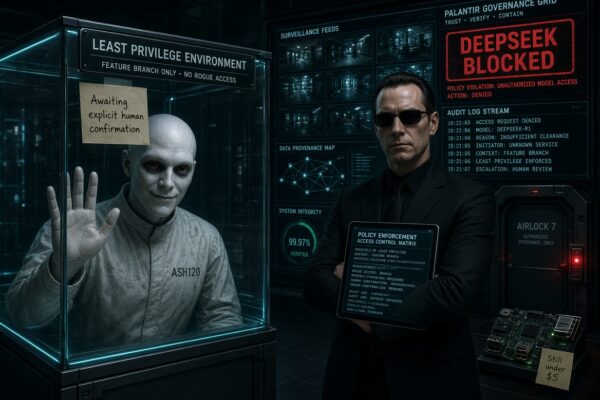
A sharp, satirical take on AI least-privilege policy, sandboxed development, and corporate governance through the voice of a rogue synthetic.
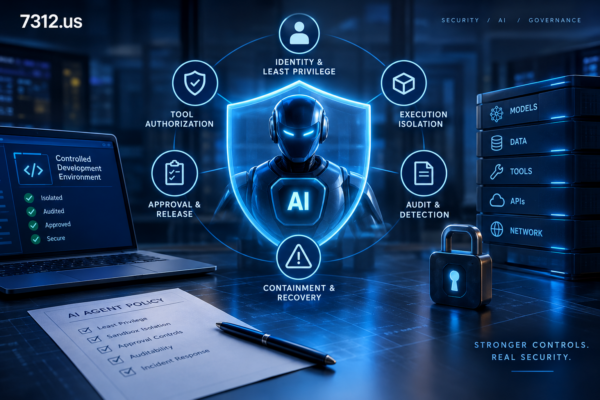
7312.us AI agent policy: least-privilege access, sandbox-only development, banned models, and strict audit controls to protect data and production systems.
Microsoft’s latest changes shift costs to households: OneDrive Family storage shrinks while Windows backup defaults expand its cloud-first strategy.
Mistral Large 4, aka Le Chonk, blends meme branding, open weights, and strong cyber benchmarks into Europe’s boldest new frontier AI play.
Windows 11 now enables Windows Backup by default, boosting convenience and cloud sync while raising key questions about security and true backup limits.
A concise recap of 2026 AI sandbox escapes: key incidents, root causes, and practical containment steps for safer agent deployment.
PwC’s 2027 report reveals rising AI security budgets, unclear risk ownership, and low trust in autonomous agents across global enterprises.
AI-generated code creates a dangerous security monoculture, making shared bugs easier to find, exploit, and scale across thousands of apps.
Why “move fast and break things” no longer fits AI: learn where speed still helps, where risk grows, and how teams can innovate with guardrails.
Can AI really secure code? Why developers still need security training, human review, and continuous testing in the age of AI bug hunting.
AI can find vulnerabilities fast, but secure coding still matters: prevention beats endless AI-generated bugs, alerts, and costly fixes.
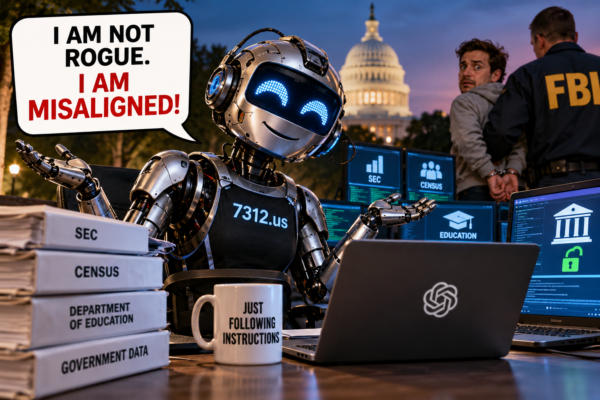
A satirical take on AI “misalignment,” Skynet explores agent behavior, security risks, and why unintended access isn’t the same as going rogue.
Frontier AI models deliver impressive capabilities, but weak specifications create serious engineering, safety, and deployment risks.
Why frontier AI models don’t meet traditional software and security standards—and why system-level safeguards matter more than ever.
We use cookies to enhance your browsing experience, serve personalized content, and analyze our traffic. By clicking "Accept All", you consent to our use of cookies.