
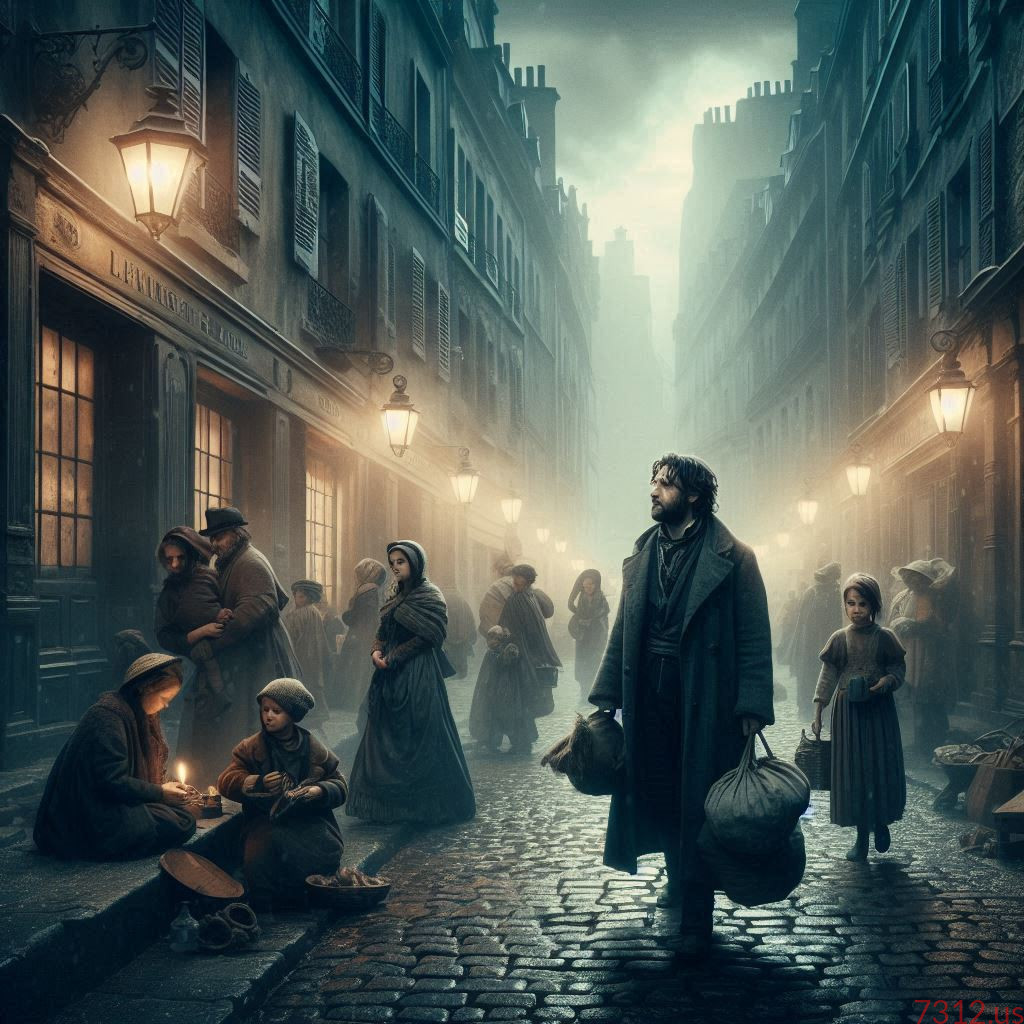
If you’re looking for a light beach read, this isn’t it—unless you want to use the book as an actual anchor. Victor Hugo’s 1862 masterpiece, Les Misérables, is a sprawling epic that functions as part adventure novel, part social manifesto, and part historical record.
At its heart, it is the story of Jean Valjean, an ex-convict seeking redemption, and Inspector Javert, the man who believes people can never truly change.
The Plot: From Chains to Grace
The story spans several decades in early 19th-century France, weaving together the lives of several “miserable” souls.
1. The Awakening
After 19 years in prison for stealing a loaf of bread (and multiple escape attempts), Jean Valjean is released. Hardened by society’s rejection, he steals silver from Bishop Myriel, the only man who treats him with dignity. When the police catch him, Myriel lies to save Valjean, claiming the silver was a gift and “buying” Valjean’s soul for God. This act of mercy transforms Valjean forever.
2. Fantine and Cosette
Years later, Valjean has reinvented himself as Monsieur Madeleine, a wealthy factory owner and mayor. He crosses paths with Fantine, a factory worker driven into poverty and eventually prostitution to pay for her daughter Cosette’s care. Before Fantine dies, Valjean promises to find and protect Cosette, who is being abused by the villainous innkeepers, the Thénardiers.
3. The Barricade
Valjean and Cosette flee to Paris to escape Javert’s relentless pursuit. Fast forward several years: Cosette falls in love with Marius Pontmercy, a young revolutionary. The story culminates in the June Rebellion of 1832, where Marius and his friends (the Friends of the ABC) build a barricade to fight for the poor. Valjean joins them—not for the cause, but to protect the man Cosette loves.
4. The Final Confrontation
At the barricade, Valjean has the chance to kill a captured Javert but chooses to set him free instead. This act of mercy breaks Javert’s rigid worldview; unable to reconcile his duty to the law with the grace Valjean showed him, Javert takes his own life. Valjean saves Marius, ensures his and Cosette’s happiness, and eventually dies in peace, his debt to the Bishop finally paid.
The “Miserable” Cast
| Character | Role | Symbolism |
| Jean Valjean | The Protagonist | Redemption and the capacity for change. |
| Javert | The Antagonist | Rigid legalism and the lack of mercy. |
| Fantine | The Tragic Mother | The crushing weight of social injustice on women. |
| Cosette | The Ward | Hope and the future generation. |
| The Thénardiers | The Villains | Moral decay and opportunistic greed. |
| Marius | The Lover/Rebel | Idealism and the bridge between classes. |
Core Themes
- Law vs. Grace: The central conflict isn’t just between Valjean and Javert, but between the letter of the law and the spirit of mercy.
- The Power of Poverty: Hugo argues that crime is often a symptom of a broken society, not just “bad” people.
- Redemption: No matter how low a person has fallen, Hugo believes they are capable of rising through love and sacrifice.
“To love another person is to see the face of God.”
— The final sentiment of the novel.