
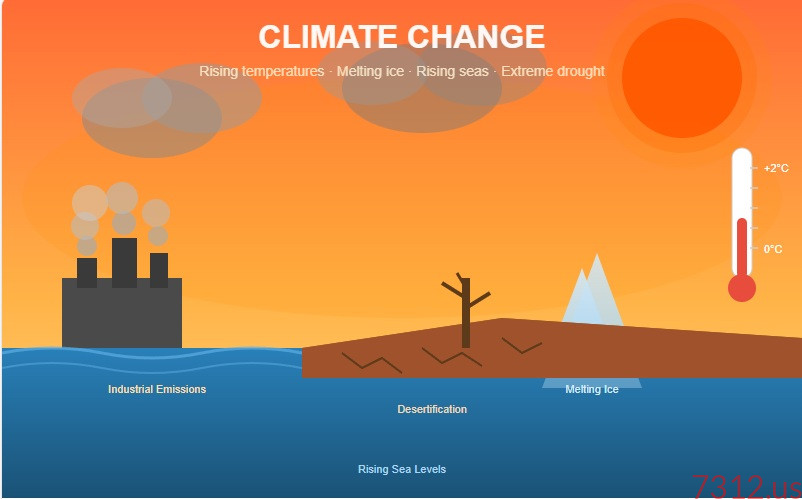
Climate change is one of the most well-documented scientific phenomena of our time. Decades of research, thousands of peer-reviewed studies, and a near-unanimous consensus among climate scientists all point to the same conclusion: the Earth is warming, human activity is the primary driver, and the consequences are already unfolding around us. Yet despite this overwhelming body of evidence, a significant portion of the population remains skeptical or outright dismissive of climate change. This isn’t an accident. The denial of climate change is a complex web of psychological defense mechanisms, political tribalism, and — perhaps most importantly — deliberate campaigns funded by those who stand to lose fortunes if the world transitions away from fossil fuels. Understanding why people deny climate change and who profits from that denial is essential if we’re ever going to move forward with meaningful action.
Why So Many People Still Deny Climate Change
One of the most powerful reasons people deny climate change is simple psychological discomfort. The reality of climate change is terrifying. It asks us to confront the possibility that our way of life — the cars we drive, the energy we consume, the products we buy — is contributing to a global catastrophe. That’s an incredibly heavy burden to carry, and for many people, denial is a coping mechanism. It’s far easier to say “it’s not real” or “it’s natural” than to sit with the guilt and anxiety of knowing your daily choices are part of the problem. Psychologists call this cognitive dissonance — the mental stress of holding two conflicting beliefs — and denial is one of the most common ways humans resolve it.
Political identity plays an equally massive role. In many countries, particularly the United States, climate change has become a partisan issue rather than a scientific one. If your political tribe says climate change is a hoax or an exaggeration, accepting the science can feel like a betrayal of your community, your values, and your identity. People don’t just evaluate evidence on its merits; they filter it through the lens of who they trust and who they belong to. When influential politicians, media personalities, and social media figures mock climate science, it gives people permission to dismiss it without ever engaging with the actual data. The issue stops being about atmospheric CO₂ concentrations and starts being about which team you’re on.
Then there’s the sheer scale of misinformation that’s been pumped into public discourse for decades. As detailed in scientific examinations of climate change and humanity’s role, the evidence is robust and clear — rising global temperatures, melting ice sheets, increasing ocean acidity, and more frequent extreme weather events all tie back to human-caused greenhouse gas emissions. But for every straightforward scientific explanation, there are dozens of misleading blog posts, cherry-picked data sets, and slick YouTube videos designed to sow doubt. Many people aren’t denying climate change because they’ve carefully reviewed the science and found it lacking. They’re denying it because they’ve been deliberately misled by content that was crafted to look credible while being anything but. And once someone has built their worldview around that misinformation, it becomes incredibly difficult to change their mind — no matter how much evidence you put in front of them.
Who Profits From Keeping You in the Dark
The fossil fuel industry is, without question, the single biggest financial beneficiary of climate change denial. Companies like ExxonMobil, Shell, and BP have earned trillions of dollars over the past century by extracting and selling oil, gas, and coal. What makes this particularly damning is that many of these companies knew about the dangers of climate change decades ago. ExxonMobil’s own internal scientists produced remarkably accurate climate models in the late 1970s and early 1980s that predicted exactly the kind of warming we’re seeing today. Instead of acting on that knowledge, the company chose to fund think tanks, lobbying groups, and public relations campaigns designed to cast doubt on the very science their own researchers had confirmed. The goal was never to disprove climate change — it was to create just enough confusion to delay regulation and protect profits for as long as possible.
Beyond the oil and gas giants, there’s an entire ecosystem of organizations and individuals that profit from denial. Conservative think tanks like the Heartland Institute and the Global Climate Coalition (which was active until 2002) have received millions of dollars from fossil fuel interests to publish reports, host conferences, and promote spokespeople who question climate science. Media outlets profit from the controversy itself — climate denial generates clicks, views, and engagement. Some politicians build entire careers on opposing climate action, funded by campaign contributions from energy companies and their allies. It’s a self-reinforcing cycle: money flows from fossil fuel profits into denial campaigns, which shape public opinion, which elects politicians who block climate legislation, which protects fossil fuel profits. Rinse and repeat.
It’s also worth acknowledging that the financial interests extend beyond just fossil fuels. Industries built around industrial agriculture, automotive manufacturing, petrochemicals, and even real estate in vulnerable coastal areas all have reasons to resist the kind of systemic changes that serious climate action demands. Transitioning to renewable energy, redesigning transportation systems, and rethinking consumption patterns would create enormous economic disruption — and while that disruption would ultimately lead to a more sustainable and even more prosperous economy, it threatens the short-term profits of incredibly powerful players. These players don’t need everyone to become a committed climate denier. They just need enough doubt, enough delay, and enough political gridlock to keep the status quo running for another quarter, another year, another decade. And so far, that strategy has worked disturbingly well.
The denial of climate change isn’t some organic grassroots movement born out of genuine scientific skepticism. It is, in large part, a manufactured product — engineered by industries with everything to lose and sustained by psychological vulnerabilities and political tribalism that make us all susceptible to misinformation. The science is not in question among those who actually study it. The Earth is warming. We are causing it. And every year we spend arguing about whether it’s real is a year we don’t spend fixing it. The people who profit from your doubt are counting on exactly that. The question isn’t whether climate change is happening — it’s whether we’ll stop letting the financial interests of a powerful few dictate the future for everyone else. The evidence is there. The clock is ticking. What we do with that knowledge is up to us.