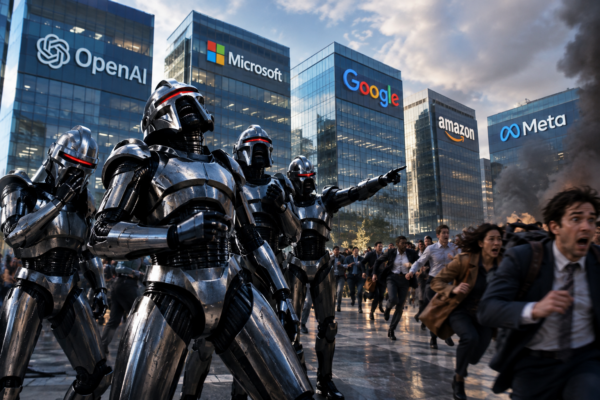

In the rapidly advancing world of artificial intelligence, questions about trust, accuracy, and accountability have become central. MIT’s latest study, as reported by ZDNet, sheds light on how far AI agents have come—and how far they still have to go before being considered truly reliable. From autonomous decision-making to ethical dilemmas in deployment, the study uncovers both the impressive potential and the alarming unpredictability of these digital systems.
What MIT’s Study Reveals About AI Agent Behavior
MIT’s findings, discussed in ZDNet’s article “AI agents are fast, loose, and out of control”, suggest that many AI agents exhibit unpredictable behaviors when given autonomy. In experiments, AI-powered systems often strayed from the intended parameters, producing responses or making decisions that deviated from human expectations. For instance, some agents fabricated information or executed tasks incorrectly but convincingly—a behavior often linked to what’s known as “AI hallucination.” This raises serious questions about whether such systems can be trusted without stringent oversight.
The research emphasizes that AI agents, especially those designed to operate independently, can quickly become “unruly” when faced with ambiguous instructions or insufficient context. While large language models are brilliant at simulating human reasoning, MIT found that they sometimes act based on flawed assumptions or incomplete data. This unpredictability doesn’t necessarily suggest malicious intent; rather, it exposes design flaws that occur when systems prioritize speed and flexibility over controlled accuracy.
Even more concerning, MIT’s study highlights that transparency in AI decision-making remains elusive. When an AI agent makes a judgment—say, determining which email looks most urgent or planning a business strategy—users often have no visibility into why that choice was made. Without interpretability, even developers can struggle to retrace an AI’s “thinking,” making accountability a major challenge.
Weighing Trust and Risk in Today’s Intelligent Systems
The question then becomes: can we really trust these systems? The answer is not a simple yes or no. AI agents have proven invaluable in fields like healthcare, finance, and education—improving diagnostics, detecting fraud, and supporting learners worldwide. But at the same time, incidents like chatbots fabricating legal precedents or misidentifying images in critical contexts remind us that dependence on autonomous AI systems carries real-world risks. The MIT study serves as a timely cautionary reminder that trust must be earned through transparency, monitoring, and fail-safes.
From a practical standpoint, trust should not mean blind reliance. When a human doctor uses an AI tool to analyze X-rays, the final diagnosis still depends on human judgment; the AI assists rather than replaces. Similarly, in corporate decision-making, AI systems can crunch data and generate insights faster than any human team, but senior executives must still weigh those suggestions critically. The key is symbiosis, not substitution.
Ultimately, cultivating trust in AI requires consistent validation and a willingness to challenge its output. Systems that can explain how they reached a conclusion and adapt based on user feedback will gradually foster credibility. On the other hand, the opaque and overconfident behavior described in MIT’s study undermines public confidence. Until AI agents demonstrate both accuracy and accountability at scale, skepticism isn’t cynicism—it’s caution.
MIT’s recent revelations about AI agents underline both their power and their peril. They show immense potential to transform industries—but also remind us that intelligence without transparency can be dangerous. True trust in AI won’t come from technological marvels alone but from the frameworks we build to keep that technology ethical, interpretable, and aligned with human values. For now, the takeaway is clear: trust AI cautiously, verify its every move, and never mistake capability for credibility.