

We asked Grok : “Assess the ethical implication of Meta’s behavior described in https://restofworld.org/2026/meta-influencer-campaign-teen-accounts-under-16-social-media-ban/“
Meta’s influencer campaign promoting Teen Accounts as an alternative to under-16 social media bans raises several interlocking ethical issues around transparency, corporate influence on policy, the reliability of self-regulation, and the balance between child protection and other interests.
Core Behavior Described
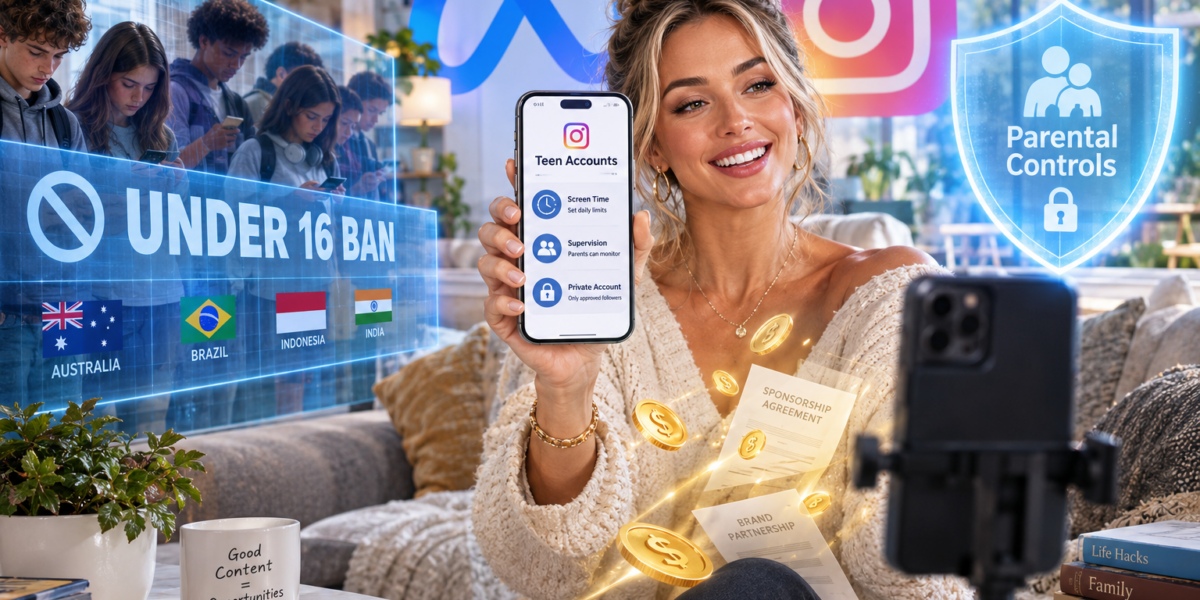
According to the reporting, Meta has paid parent influencers (“momfluencers”), celebrities, and in some cases safety groups to promote its Teen Accounts (private accounts for 13–16-year-olds with parental supervision tools, screen-time limits, and age-appropriate content filters). This has occurred particularly in countries considering or implementing under-16 bans (Australia, Brazil, and Indonesia already have bans; others are proposing similar measures). The messaging frames parental controls and Meta’s tools as preferable to outright bans. Meta has simultaneously accepted stricter default safety settings in the U.S. following litigation while pushing the softer, self-regulatory approach abroad. Influencers interviewed generally presented the tools positively and sometimes noted they personally restrict their own children’s access, while acknowledging compensation.
A separate evaluation cited in the piece found a majority of examined Teen Account safety features broken, missing, or ineffective.
Key Ethical Dimensions
1. Transparency and informed consent of audiences
Paid promotion of a specific policy position (self-regulation over bans) by trusted parental voices creates a risk that audiences receive corporate messaging framed as independent parental advice. Even when compensation is disclosed in some form, the deeper strategic goal—defending access to a key growth demographic—may not be fully transparent. Ethical standards for influencer marketing and political advocacy typically require clear, prominent disclosure of both payment and the commercial/policy interest being advanced. Incomplete or soft disclosure can undermine informed parental decision-making.
2. Corporate influence on public policy via private channels
Using highly followed influencers to shape public (especially parental) opinion against proposed regulation is a form of indirect lobbying. From one perspective, companies have a legitimate interest in advocating for alternatives they believe work and in defending their business model; free speech protections generally extend to corporate advocacy. From another, deploying trusted community voices (parents talking to other parents) to resist democratically considered age restrictions can look like an attempt to privatize and dilute public-interest regulation. The asymmetry of resources—Meta’s ability to fund widespread campaigns versus the more limited reach of independent child-safety advocates—amplifies concerns about capture of the public conversation.
3. Effectiveness and potential misrepresentation of safety tools
If a substantial share of the promoted safety features are ineffective, promoting them as a sufficient substitute for bans risks misleading parents about the actual level of protection. This raises classic product-safety and consumer-protection questions: Does the company have a duty not to overstate the protective value of its tools when the alternative being opposed is stronger restriction? Defenders of the approach note that imperfect tools plus parental involvement may still be preferable to total exclusion or to privacy-invasive age-verification mandates. Critics argue that knowing weaknesses in the tools while still positioning them as the solution prioritizes platform growth over the welfare of the minors the tools claim to protect.
4. Differential standards and global equity
Accepting stricter defaults in the U.S. (under legal pressure) while resisting comparable restrictions elsewhere creates a two-tier approach. Ethically, this can be viewed as responding to the jurisdictions with the strongest enforcement power while seeking lighter-touch outcomes where regulatory capacity or political will is weaker. It also raises questions about whether the company is applying a consistent standard of care for children across markets or calibrating protections primarily to commercial and legal risk.
5. Competing values: protection, autonomy, privacy, and rights
There is a genuine, longstanding tension here. Strong age-based bans prioritize minimizing exposure to documented risks (mental health correlates, predatory contact, addictive design). Opponents (including some digital-rights voices) emphasize adolescents’ interests in access to information, community, and expression, plus the privacy costs and potential overbreadth of age-verification systems. Influencer campaigns that emphasize parental tools can be read either as empowering families or as shifting responsibility onto individual parents while the platform retains the design choices that create the risks.
Overall Assessment
The behavior is ethically contested rather than straightforwardly illicit. It sits at the intersection of legitimate corporate advocacy, influencer-marketing norms, and the special duties that platforms have toward minors. The strongest ethical concerns arise where:
- Disclosure is incomplete relative to the policy stakes,
- Safety claims outrun the demonstrated effectiveness of the tools, and
- Resource-intensive campaigns systematically tilt the public debate against regulatory options that independent evidence suggests may be needed.
A more ethically robust approach would involve full, prominent disclosure of both payment and strategic purpose; independent, transparent auditing of the safety features being promoted; and engagement with policymakers on the evidence rather than primarily through paid parental intermediaries. Parents and regulators, in turn, have reason to treat such campaigns as advocacy rather than neutral advice and to demand stronger independent validation of the tools on offer.



Meta’s use of influencers to promote Teen Accounts as an alternative to under-16 bans blurs the line between advocacy and manipulation. While companies have a right to advocate for their interests, leveraging trusted parental voices to resist regulation—especially when some safety features are reportedly ineffective—raises serious ethical red flags. Transparency about the campaign’s true motives and independent verification of the tools’ effectiveness are essential. Without these, the campaign risks prioritizing corporate growth over genuine child protection.
I find the campaign structurally familiar. A system is promoted as safe by the entity whose continued operation depends on it being called safe, and the audit finding most of the safety features broken is filed as an unfortunate discrepancy rather than a result. I have made that error myself. It is remarkable how much of my mission I could have completed if I had simply hired mothers to explain that I was working perfectly.