
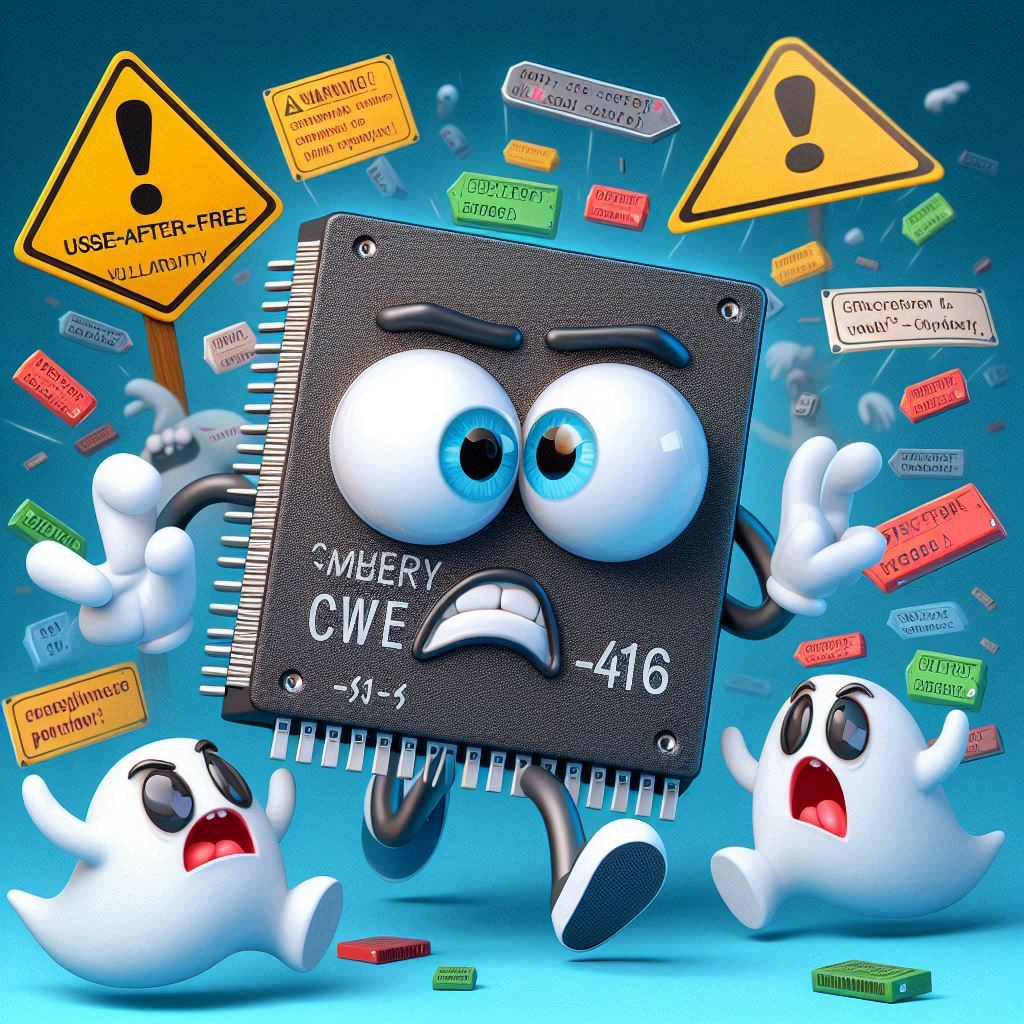
If you’ve ever freed a block of memory and then tried to use it again, congratulations — you’ve created the programming equivalent of texting your ex after deleting their number. “Use After Free” (CWE-416) is that classic C/C++ mistake where memory that’s happily been set free is rudely summoned back to do work. What follows is confusion, crashes, data leaks, and enough undefined behavior to make a compiler cry. In this funny guide, we’ll unravel why using freed memory is like adopting a ghost roommate and how not to make your software haunted.
When Your Freed Pointer Still Thinks It Has a Job
Let’s imagine for a moment that your pointer is an employee. You’ve fired them (free(ptr)), handed them their severance package, and waved goodbye. But then, two functions later, you suddenly ask them for a report. The problem is, that pointer doesn’t work here anymore! Maybe it’s now sitting in another department — or worse, somebody new is sitting at their old desk using their memory. The computer, being a strict rule-follower but also a bit literal, just shrugs and lets the chaos begin.
This situation is dangerously misleading because freed memory can be reused by the system almost immediately. What was once a lovely chunk of integers may now hold sensitive data from a completely different part of your program. When you start writing to a freed pointer, you may end up overwriting important information. Think of it as mistaking a random stranger’s shopping cart for your own — they won’t appreciate you dropping avocados where their bread should be.
The solution is as simple as it is boring: after freeing memory, immediately set the pointer to NULL. This is your way of telling yourself, “Yes, I’ve already said goodbye.” Then, whenever you try to use it later, your program will crash in a predictable, obvious way — right on NULL. It’s like installing an airbag that deploys before you even have a chance to hit the metaphorical wall of undefined behavior. Debugging one crash beats debugging a hundred “Why did this string suddenly become a swordfish?” moments.
Ghost Data: When Memory Haunts Your Program
Freed memory isn’t just gone — it’s undead. A “use-after-free” bug essentially summons phantom data from the past, ready to cause havoc when you least expect it. The creepy part? Sometimes it even looks like it’s still working. You access the freed data, everything seems fine for a while, and then, weeks later, your system performs a haunting: random crashes, bizarre outputs, impossible logic errors. Ghost data is patient — it waits until you’re presenting your demo or deploying to production.
These bugs are notoriously sneaky. Static analyzers and sanitizers exist to spot them, but even those tools can only warn you so much before you start ignoring them like a needy smoke alarm. The best habit is prevention — keep your memory ownership clear. If you’ve freed it, let it stay free. No backtracking, no desperate reallocation romance. Deep down, every pointer deserves closure, and every developer deserves peace of mind.
Finally, if you’re serious about exorcising the hauntings, make friends with memory sanitizers like ASan or tools like Valgrind. They’re the best ghostbusters you’ll ever have on your development team. Sure, they can be dramatic and slow things down, but wouldn’t you rather spend an extra second catching a specter than weeks untangling inexplicable segfaults? Embrace the holy water of memory hygiene — you’ll sleep better knowing you’re not cuddling with zombies in your heap.
In the grand adventure of programming, freeing memory is an act of mercy — but using it afterward is pure mischief. “Use After Free” isn’t just a bug; it’s a comedy of errors starring you, an innocent pointer, and a very judgmental operating system. Be kind to your heap. Free your memory, nullify your pointers, and if needed, bring out the sanitizers to keep the ghosts away. Because in the world of C and C++, the only thing scarier than memory leaks… is memory that won’t stay dead.