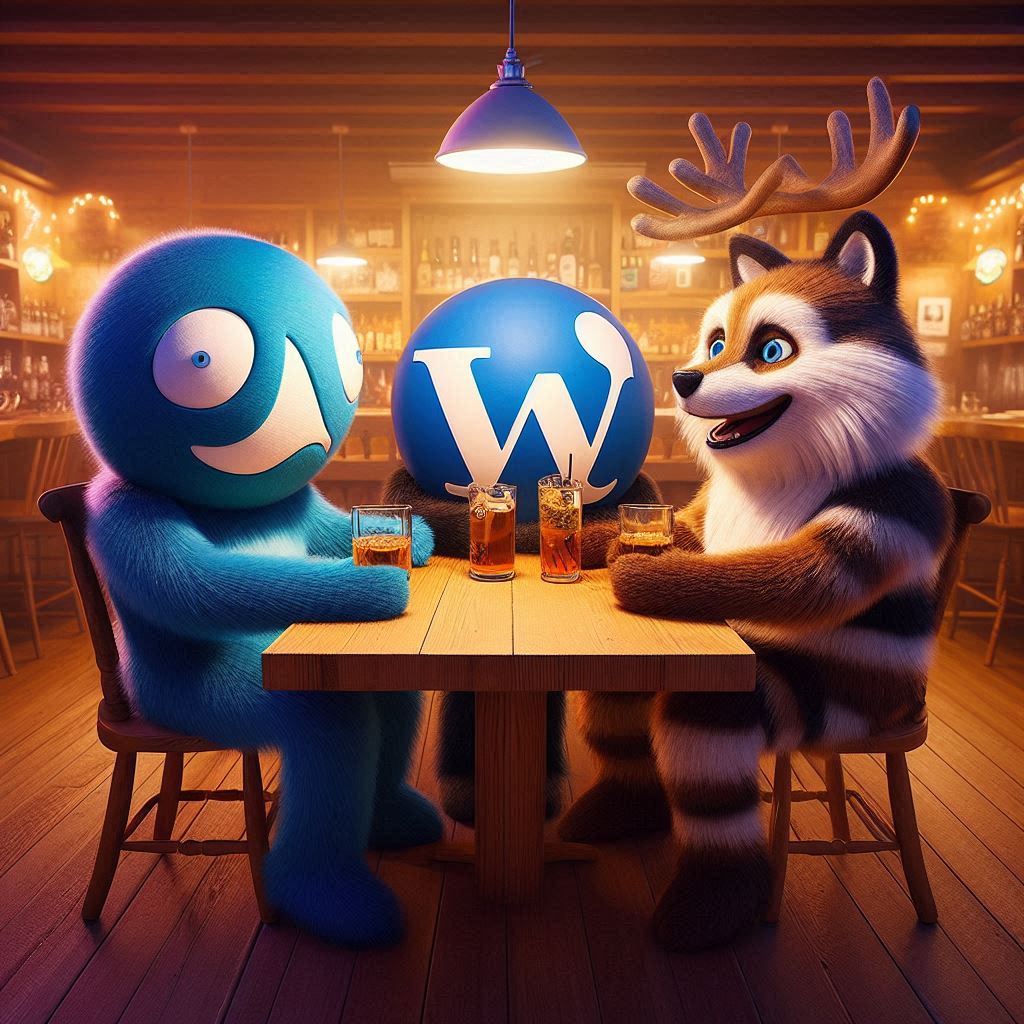
It’s a quiet evening in a geeky little bar called The Digital Tavern, where CMS platforms gather after long hours of powering websites. Behind the wooden counter, the bartender wipes a glass clean, ready for another night of tales told in PHP and plugins. Suddenly, the door swings open, and three familiar figures walk in—Joomla, WordPress, and Drupal. What follows is a night of hilarity, mild rivalry, and more than one crashed server of emotions.
When Joomla Orders a Drink No One Understands
Joomla strolls in first, wearing an elegant jacket with far too many buttons. With a confident smile, it approaches the bar and orders something no one can quite pronounce—“a Multilingual Modular Martini with extra Access-Level Garnish.” The bartender blinks, unsure where to begin, but Joomla insists. That’s Joomla’s charm: flexible, sophisticated, yet always slightly confusing to implement.
At the corner table, a few site admins watch in silent admiration. They know Joomla’s drink will have layers of customization, perhaps too many. Joomla believes in giving the user control—so much so that even ordering a beverage requires editing configuration files and setting access permissions for the bartender. By the time the drink arrives, half the bar is involved, and everyone’s a little unsure if it’s done right.
Still, Joomla sips contentedly, appreciating the complexity. It’s not about quick refreshment but the journey of crafting something powerful and unique. Sure, it took three add-ons and a permissions reset to get there, but Joomla wouldn’t have it any other way. It looks over its glass, proud yet slightly exasperated at how often it must explain itself.
WordPress Laughs, While Drupal Corrects the Recipe
Then comes WordPress, casual and cheerful, sliding onto the next barstool in a hoodie that says “Powered by Plugins.” WordPress orders something simple—a “Bloghattan,” extra easy on the setup. Within seconds, it has a drink in hand, a new theme on the glass, and half the bar nodding approvingly. WordPress laughs at Joomla’s complicated order, saying, “You could’ve just installed an extension for that!” It’s that friendly, approachable personality everyone loves—sometimes too much.
WordPress chats with everyone, its user interface glowing in the dim light, gathering admirers and sharing stories about SEO optimization and social sharing buttons. It believes in simplicity but often gets a little carried away with the number of plugins added to its glass. Still, no one can deny it makes building a drink—or a website—look effortless. Its fans are loyal, abundant, and sometimes a bit evangelical about how easy life is with WordPress behind the bar.
Meanwhile, Drupal sits quietly in the corner, arms folded, with a stack of documentation beside its drink. When the bartender accidentally adds too much sugar, Drupal clears its throat and begins explaining how the recipe could be improved through better taxonomy and stricter user permissions. Everyone groans, but secretly, they know it’s right. Drupal may be the serious one in the group, the architect who prefers precision over ease. Its drink is perfectly balanced, perfectly structured, and only slightly intimidating.
As the night winds down at The Digital Tavern, Joomla finishes its intricate martini, WordPress high-fives the bartender, and Drupal is still writing notes about optimizing cocktail schemas. They may never agree on the perfect recipe, but together they represent the beautiful diversity of the web—where creativity, usability, and structure coexist (and occasionally clash). In the end, they all share a toast—to open source, to community, and to the never-ending journey of making the web just a bit more fun with every update.