Imagine explaining artificial intelligence to your grandmother without making her eyes glaze over. That’s exactly the challenge that inspired the creation of a brand-new resource called AI for Grandma, now live at https://7312.us/ai4grandma/. Built in roughly 30 minutes using an approach called vibe coding, this little project is a perfect example of how modern AI tools are changing what’s possible for everyday creators and developers alike.
Meet AI for Grandma: Launched in Just 30 Minutes
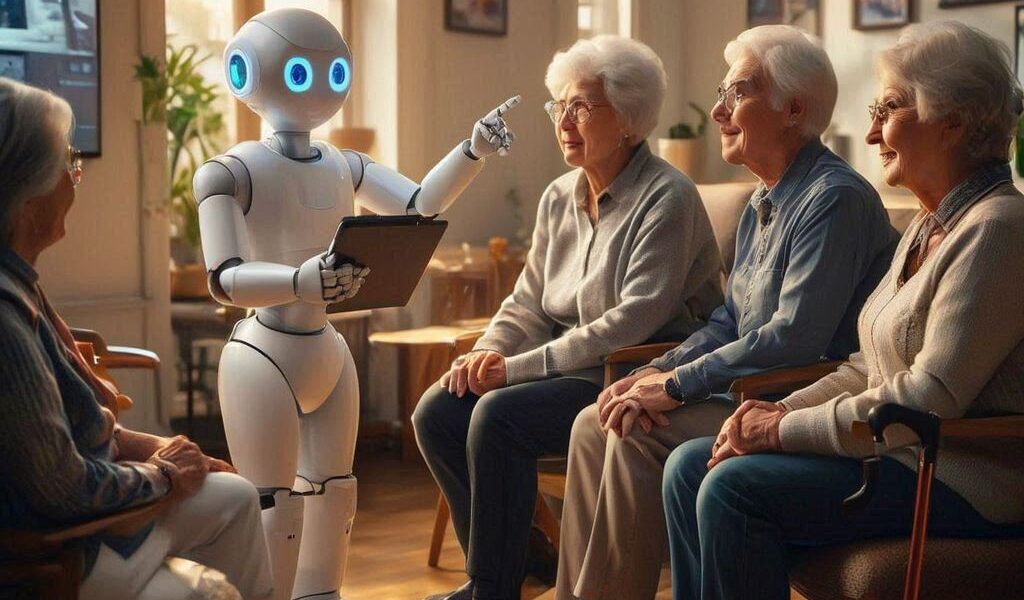
The world of artificial intelligence can feel overwhelming, even for tech-savvy people. For older generations who didn’t grow up with smartphones, let alone machine learning, the jargon alone is enough to shut down the conversation before it even starts. That’s why AI for Grandma was created — to strip away the complexity and explain AI in plain, friendly, human language that anyone can actually understand.
The site was launched with a simple mission in mind: make AI accessible, not intimidating. Too many resources assume a baseline of technical knowledge that most people simply don’t have. Whether your grandma is curious about why her phone suddenly "knows" what she’s about to type, or she’s heard the word "ChatGPT" on the evening news and wants to understand what all the fuss is about, AI for Grandma meets her right where she is.
What’s remarkable is that the whole thing came together in about 30 minutes from concept to live website. That’s not a typo. In the time it takes to watch an episode of Jeopardy, this resource went from an idea scribbled in someone’s head to a fully functioning, publicly accessible site. That kind of speed used to be unthinkable for solo creators without a big development team behind them — but that’s exactly what makes this story worth telling.
How Claude Did 90% of the Work With Vibe Coding
If you haven’t heard of vibe coding yet, you’re about to. It’s a term that’s been gaining traction in developer circles, describing the practice of collaborating with an AI assistant — like Claude — to build something by essentially describing what you want in plain language and letting the AI handle the heavy lifting. You’re not so much writing code as you are directing it, guiding the AI with ideas, feedback, and intention while it does the actual technical work.
In the case of AI for Grandma, roughly 90% of the total build time was Claude working — generating the content, structuring the page, writing the explanations, and putting together the pieces that make the site what it is. The human side of the equation was more about steering the ship: deciding on the tone, reviewing outputs, making small adjustments, and nudging the direction when something didn’t feel quite right. It’s a genuinely collaborative process, but the balance of effort has shifted in a way that would have seemed almost magical just a few years ago.
This is what makes vibe coding such an exciting development for people who have ideas but not necessarily deep technical skills. You don’t need to know how to code to build something useful and real anymore. What you need is a clear vision, the willingness to iterate, and a good AI partner. Claude proved to be exactly that in this case — fast, capable, and surprisingly good at writing in a warm, accessible tone that suits a project like AI for Grandma perfectly. If this 30-minute experiment proves anything, it’s that the barrier to building something meaningful online has never been lower.
AI for Grandma is more than just a cute project — it’s a small but meaningful example of two powerful ideas colliding at the right moment. First, that AI education desperately needs to be simplified and humanized for the people who need it most. And second, that tools like Claude are making it possible for anyone with an idea and half an hour to actually bring something into the world. Head over to https://7312.us/ai4grandma/ and share it with someone in your life who’s been curious about AI but didn’t know where to start. Your grandma might just thank you for it.