
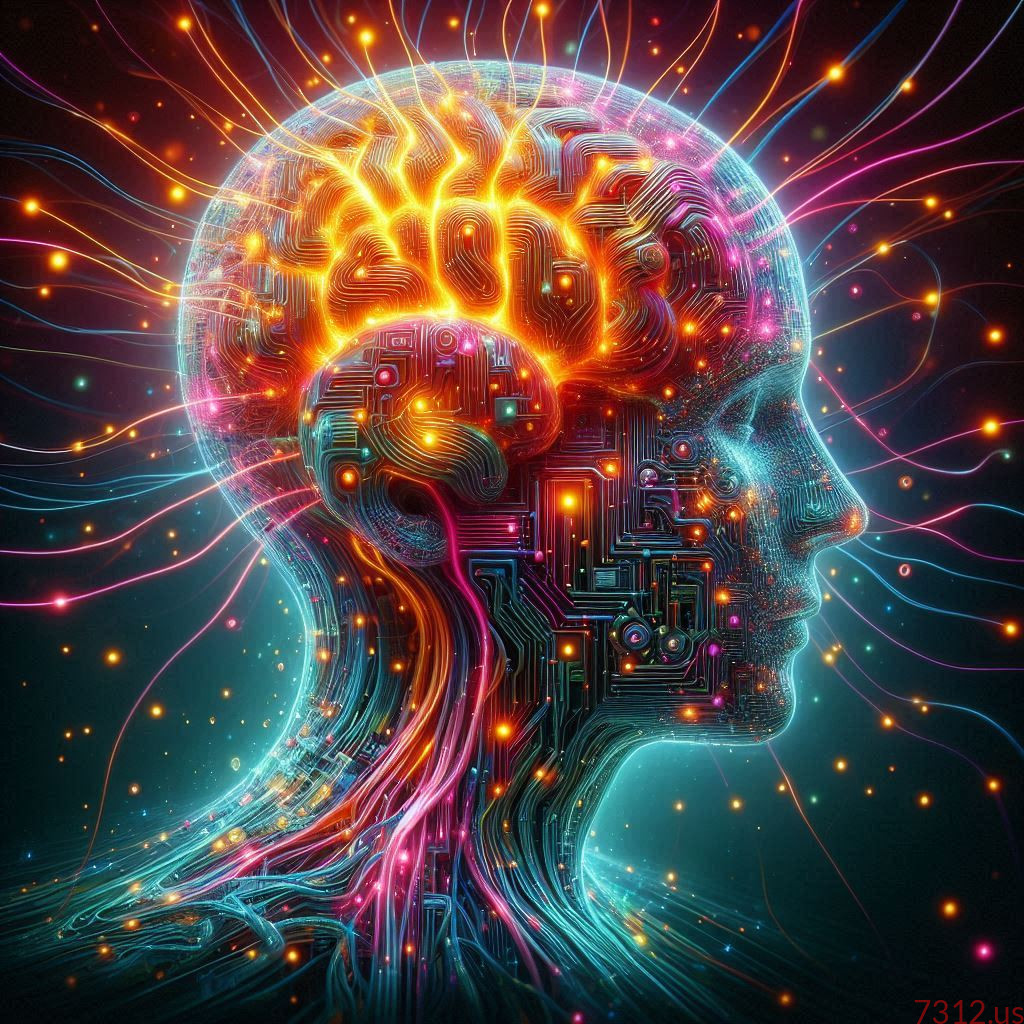
Artificial intelligence has entered the workplace the way office coffee once did: first as a novelty, then as a necessity, and finally as something everyone consumes while privately wondering whether it is slowly destroying them. The modern employee now lives in a strange new bargain. In exchange for a little more speed, a little more convenience, and a lot more output, we hand over a few cherished mental functions and call it innovation.
Some people say AI is making us more efficient. Others say it is turning our brains into decorative workplace accessories, useful mainly for nodding during meetings while a chatbot summarizes our own thoughts back to us in bullet points. Both things can be true, which is what makes this moment so funny, slightly alarming, and extremely profitable.
The great corporate romance with AI has produced a familiar headline: businesses are thrilled, workers are tired, and everyone is pretending this is unquestionably progress. Inspired by the growing conversation around how AI may be chipping away at human thinking even as it supercharges productivity, this is a look at the absurd glory of a future where our minds may be dimming just as quarterly earnings shine.
AI Is Melting Minds While Margins Soar
The sales pitch for AI is irresistible. Why spend thirty minutes writing an email when a machine can draft one in six seconds and make you sound like a polite management consultant with no detectable personality? Why wrestle with a spreadsheet when an algorithm can do it faster, cleaner, and with enough confidence to make you doubt whether you ever understood numbers in the first place? For executives, this is less a technological shift than a religious experience. Costs go down, output goes up, and somewhere in a conference room a PowerPoint slide whispers the word “synergy.”
Meanwhile, workers are discovering the subtle downside of outsourcing every minor cognitive task. At first it feels liberating to let AI summarize documents, brainstorm ideas, organize calendars, rewrite reports, and explain concepts you once knew well enough to explain yourself. Then one day you sit down to write a basic paragraph without assistance and realize your brain is buffering. The machine has not exactly stolen your intelligence, but it has encouraged it to take an extended and possibly permanent lunch break.
This is the comic genius of the current AI boom: the very tools that promise to enhance human capability may also be training humans to become spectators in their own intellectual lives. Yet because this decline arrives wrapped in convenience, nobody wants to make too big a fuss. If profits are up 14%, does it really matter if Chad in marketing can no longer compose a coherent memo without consulting his silicon muse? In the modern economy, mental sharpness is nice, but margin expansion is divine.
The corporate class, unsurprisingly, is not losing sleep over this. If anything, it has found the perfect management formula: deploy AI to make employees faster, measure every gain obsessively, and ignore the creeping sense that people are becoming cognitively dependent on autocomplete. The spreadsheet does not have a column for “independent thought,” and even if it did, nobody could prove it was driving shareholder value this quarter. In boardrooms, the conversation is about transformation, optimization, and competitive advantage, not whether the staff can still think a problem through from first principles.
There is also a special absurdity in how AI has made everyone feel both empowered and vaguely unnecessary. Workers now command tools of immense computational power, which sounds glamorous until you realize many are using them to generate meeting notes from meetings that should never have happened. Whole swaths of office life have become an ecosystem of machine-assisted administrative theater. We use AI to draft ideas, summarize responses, and refine communications with other people who are also using AI to draft, summarize, and refine. Humanity has achieved the dream of frictionless productivity by removing as much humanity from the process as possible.
And still, the numbers look terrific. Companies boast about leaner operations, accelerated workflows, and employees “freed to focus on higher-value tasks,” which often means producing even more output under tighter deadlines. AI is sold as relief, but it frequently functions as an amplifier. It does not simply reduce labor; it raises expectations. If you can do twice as much with half the effort, management’s natural response is to ask why you are not doing four times as much by tomorrow morning.
Brain Cells Out, Productivity Metrics Up
The deeper joke is that society has always claimed to admire critical thinking right up until the moment a faster option appears. AI is merely the latest and most efficient mechanism for proving that convenience beats virtue every time. We say we want original thought, but what we really want is original thought delivered instantly, formatted neatly, and optimized for presentation slides. If a chatbot can produce something passable in seconds, many people will gladly trade a little mental endurance for a little operational ease.
This does not mean AI is evil, only that humans are very predictable. Give us a tool that saves time, and we will use it until we forget how to do the thing ourselves. It happened with phone numbers, maps, spelling, and basic patience. Now it is happening with writing, research, analysis, and maybe even judgment. The concern is not that AI will suddenly render humanity stupid overnight. It is that it can quietly erode the habit of thinking, which is more or less the same result delivered in a friendlier interface.
Businesses, of course, interpret this trend through the only language they trust completely: metrics. If customer service tickets are resolved faster, if code is written more quickly, if marketing copy appears in industrial quantities, then the technology is working beautifully. Whether workers feel mentally dulled, more dependent, or less engaged is harder to chart on a dashboard. It is difficult to quantify the loss of friction that once forced people to wrestle with ideas long enough to actually understand them.
That tension explains why AI inspires both awe and dread. On one hand, it can genuinely help people move faster, break through tedious tasks, and spend less time drowning in repetitive work. On the other, repetitive work was often where people developed competence. The boring process of drafting, editing, checking, revising, and reconsidering was not just inefficient busywork. It was practice. Remove too much of it, and you do not simply remove drudgery; you may also remove the training ground where skill and confidence are built.
In true modern fashion, many workplaces are responding by pretending this contradiction does not exist. The official line is that AI handles the routine while humans do the creative, strategic, high-level thinking. That sounds lovely, except high-level thinking usually depends on years of wrestling with the routine. You do not become insightful by skipping straight to the insight. You get there by doing the slow, annoying parts badly for a long time until you eventually become good. AI promises to spare us that journey, which is efficient in the same way taking an elevator up a mountain is efficient: you arrive faster, but you miss learning how to climb.
Still, satire aside, there is a reason this all continues. AI really does boost business. It really does reduce friction. It really does open possibilities that companies would be foolish to ignore. The absurdity lies not in using it, but in acting as though every gain comes free. Somewhere beneath the productivity triumphalism is a simple trade-off: the more thinking we outsource, the less practice we get at being thinkers. Corporate America may decide that is an acceptable exchange, especially if the quarterly report sparkles. The rest of us may eventually wonder whether we optimized ourselves into a state of cheerful mental atrophy.
The age of AI has given us a wonderfully ridiculous promise: you can do more, faster, with less effort, and somehow this will have no effect at all on the machinery between your ears. Business leaders are embracing that fantasy because, to be fair, the benefits are immediate and measurable. Efficiency is real. Profit is real. So is the temptation to let the machine handle just one more task until your own mind becomes an occasional consultant to your software.
That does not mean we need to smash the servers and return to writing memos by candlelight. It simply means we should admit the joke while we are living inside it. AI can absolutely boost business, but if we are not careful, it may also turn thinking into a boutique skill practiced mainly by hobbyists, professors, and the one colleague who still insists on reading the full report.
So yes, the bots are helping the bottom line. They are also encouraging a world in which human cognition is increasingly optional, right up until something goes wrong and everyone urgently wants a real person with a functioning brain. Until then, enjoy the productivity gains, admire the margins, and try to remember how to write an email without asking a machine what you think.

One thought on “AI Is Frying Our Brains and Boosting Business”