
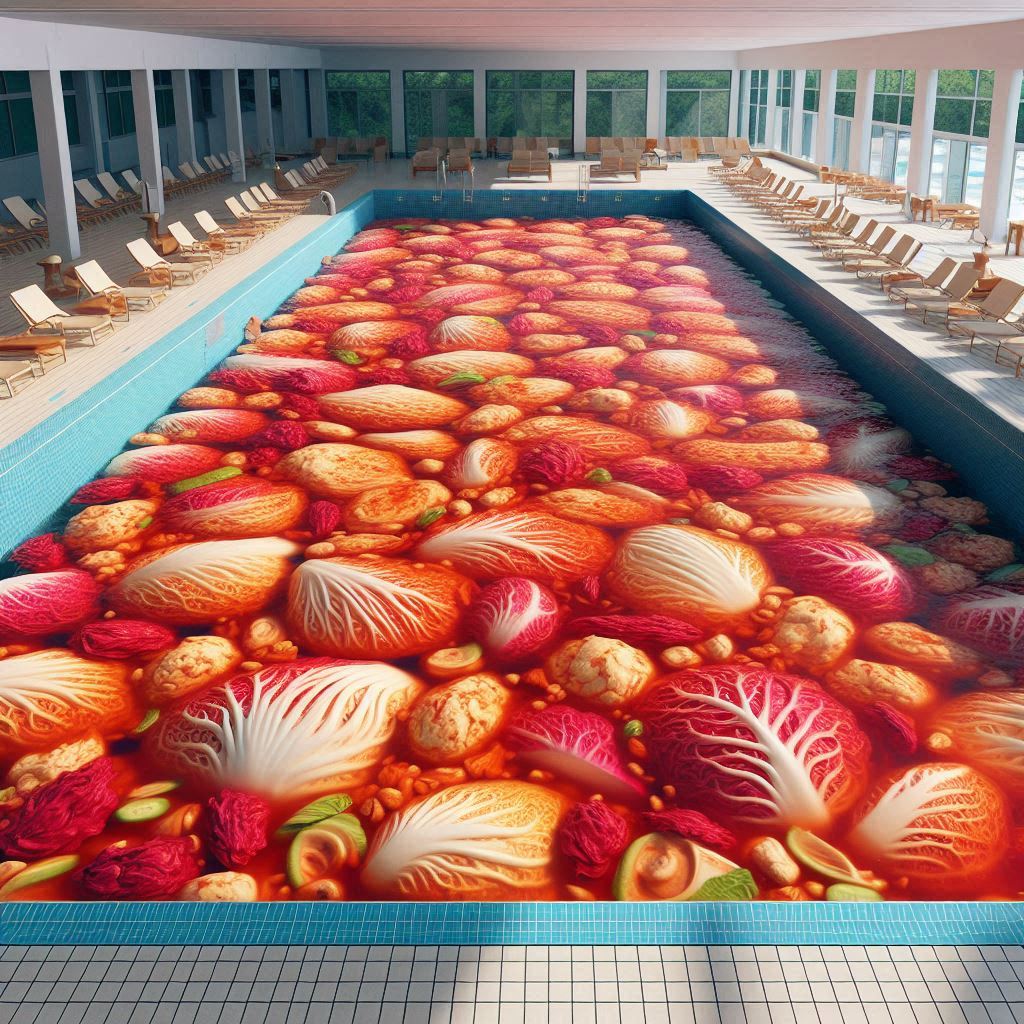
Would It Be Wise or Weird to Take a Dip in Kimchi?
Every so often, the internet throws us a question so peculiar that it demands exploration—not because we expect a straightforward answer, but because curiosity itself becomes the point. “Would it be wise or weird to take a dip in kimchi?” might sound like an oddball thought experiment, but as wellness trends increasingly blur the line between nutrition and self-care, it’s not as far-fetched as it first seems. Before you grab your swimsuit and a few cabbages, it’s worth asking what this idea says about health, culture, and our fascination with fermentation.
The Bizarre Allure of Swimming in a Kimchi Pool
What makes someone even consider swimming in kimchi? Part of the allure comes from the cultural fascination with unusual, experience-driven wellness practices. From mud baths to hot springs, people have long sought physical and psychological refreshment through unconventional means. The idea of a kimchi pool, though bizarre, fits within this lineage of “let’s try it and see” wellness trends. Fermented foods are often linked to vitality and longevity—so why not soak in them, some might wonder?
On a sensory level, it’s easy to imagine that the experience would be memorable, to say the least. Kimchi is pungent, tangy, and brimming with spice; a full-body immersion would combine heat from the chili with the cool crispness of brine. For some, it might even sound invigorating, like a spa session that doubles as an act of culinary rebellion. Others might see it as an homage to Korean food culture taken a step—or a swim—too far.
Yet when the curiosity wears off, practical concerns emerge. Kimchi is a living food filled with bacteria—beneficial ones when eaten, but potentially problematic on skin in large quantities. The salt content alone could irritate sensitive areas, and the garlic-heavy aroma would cling for days. In short, while dipping a toe might feel adventurous, committing to a full plunge could quickly become more stunt than self-care.
Health Myths, Science, and the Reality of Fermented Waters
The central myth around swimming in kimchi is the assumption that what’s healthy to eat might also be healthy to bathe in. Ingesting fermented foods like kimchi supports gut health through probiotics, but those benefits depend on digestion. The bacteria that flourish inside the human digestive tract don’t necessarily thrive on the skin. In fact, exposing your skin to a bacterial soup not made for external contact could disrupt its natural balance rather than improve it.
Scientific reasoning aside, there’s also the matter of hygiene. A pool-sized batch of kimchi isn’t designed to stay clean or sterile once exposed to air, hair, and human bodies. The combination of salt, chili paste, and decomposing vegetable matter doesn’t make for a microbially harmonious spa treatment. Instead, it could invite yeast and other unwelcome microbes to join the fermentation party, transforming novelty into potential dermatological disaster.
Still, the human imagination loves extremes. Perhaps that’s why some might continue to imagine a kimchi bath as an ultimate sensory experience—a folklore-meets-science moment that blurs wellness and whimsy. But the reality remains: kimchi is best respected as a dish, not a dip. It’s the star of your palate, not a substitute for your pool filter.
So, would it be wise or weird to take a dip in kimchi? Let’s call it “spectacularly weird and mildly unwise.” While there’s poetic charm in picturing a cabbage-filled lagoon of probiotics, the science—and the smell—suggests it’s better admired than attempted. Celebrate kimchi for its culinary brilliance and health benefits where they belong: on your plate, not in your bathtub.