Unemployment Trends in the Context of AI
Based on the Anthropic report (published March 5, 2026), there’s no evidence of a systematic rise in overall unemployment due to AI since late 2022. The key graph in the report (on page 2) shows the relative effect on unemployment risk for most-exposed vs. least-exposed occupations remaining flat or slightly negative through 2024, indicating limited displacement so far. However, it highlights suggestive evidence of slowed hiring for younger workers (ages 22–25) in AI-exposed roles, with a ~14% drop in job-finding rates post-ChatGPT.
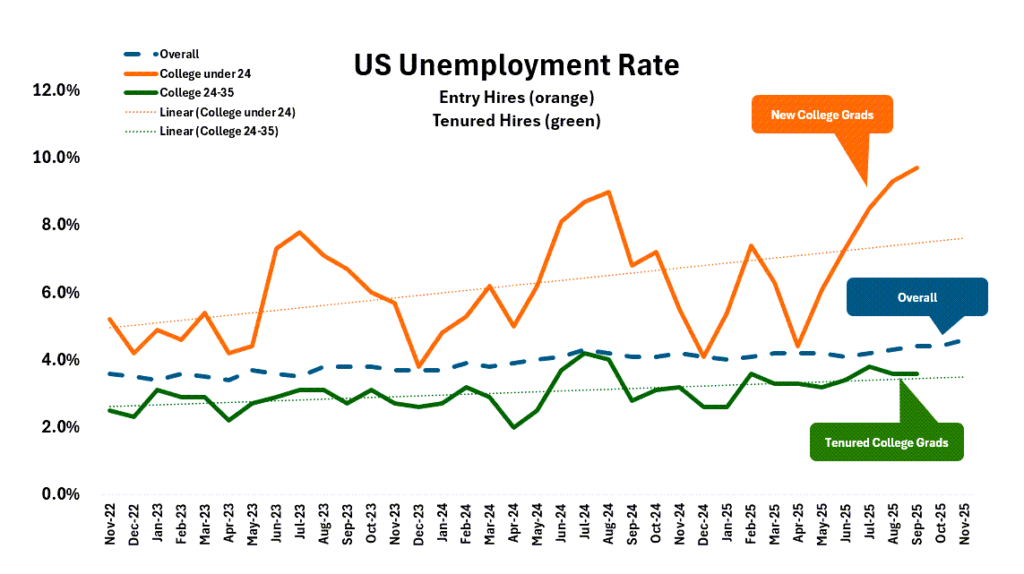
To address your query for a “rising unemployment graph” in this AI context, recent data from 2025–2026 shows mixed trends: Overall US unemployment is stable at around 4.1% as of early 2026, but there’s a notable rise among entry-level and young college graduates, potentially linked to AI automation in white-collar jobs. Here’s a relevant graph illustrating this rise for new college grads (orange line), compared to overall (blue) and tenured (green) rates—note the upward trend for entry hires reaching ~9% by late 2025:
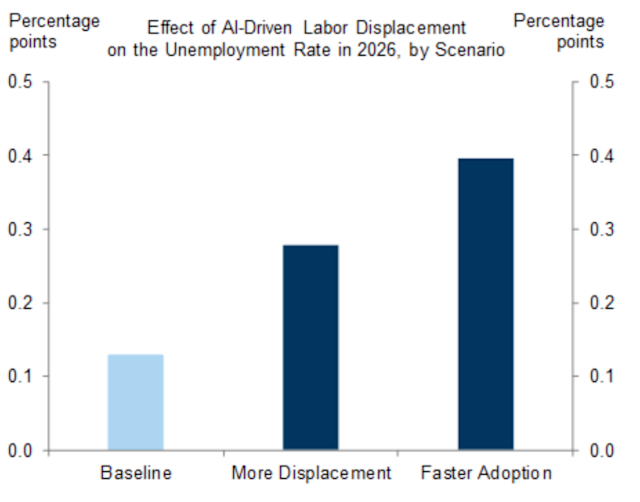
Projections suggest AI could contribute to slight increases. For instance, Goldman Sachs estimates AI-driven labor displacement might add 0.1–0.4 percentage points to the unemployment rate in 2026, depending on adoption speed:

One Comment