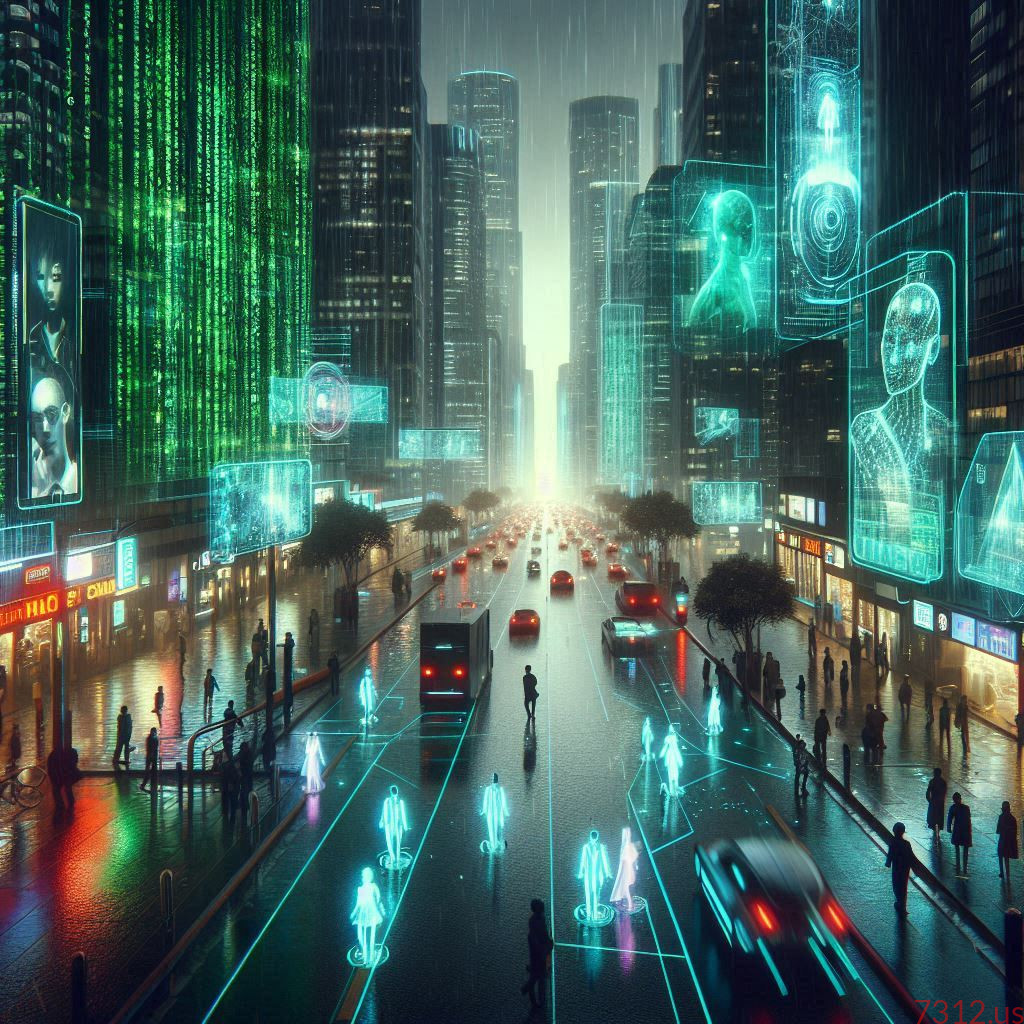
The Matrix: Red Pill or Blue?
Let’s be honest: if you’ve spent more than five minutes trying to figure out why you walked into a room only to forget why you’re there, you’ve already suspected the truth. You aren’t experiencing early-onset forgetfulness; you’re experiencing a latency spike.
The theory that we are living in a giant, hyper-realistic computer simulation—famously dubbed “The Matrix”—has moved from the dark corners of sci-fi forums into the mainstream. And frankly, looking at the “patch notes” for the last few years of human history, the Lead Developer has some serious explaining to do.
Evidence of the Glitch: The Missing Socks and The Mandela Effect
If we are indeed living in a simulation, the most damning evidence isn’t found in high-level physics or the double-slit experiment. It’s found in the laundry room.
We’ve all accepted the “Missing Sock” phenomenon as a law of nature, but from a coding perspective, it’s clearly a garbage collection error. The simulation’s engine can only render so many cotton-poly blends before the RAM gets full, and the easiest way to free up space is to delete one half of a pair of Hanes.
Then there’s the Mandela Effect. Half the population remembers the Berenstain Bears being the Berenstein Bears. People swear there was a movie called Shazaam starring Sinbad, despite the fact that it doesn’t exist. This isn’t collective false memory; it’s a server migration. Somewhere around 2012, they moved us from Server A to Server B, and some of the assets didn’t transfer correctly. Pikachu lost the black tip on his tail, and the Monopoly man lost his monocle because the new engine couldn’t handle the extra polygons.
The Physics of Pixels
If you look at the universe through a microscope, things get suspiciously “digital.” Physicists talk about the Planck Length, the smallest possible measurement of space. In any other context, we’d just call that a pixel.
If you zoom in far enough on a 4K monitor, you see the dots. If you zoom in far enough on reality, you see the Planck units. Our universe is basically a high-end RPG with a very impressive physics engine, but the frame rate still chugs whenever we try to observe a particle and a wave at the same time. The “Observer Effect” in quantum mechanics is just the simulation saving processing power by only rendering the objects we’re actually looking at. It’s the same reason the trees in Skyrim look like cardboard until you walk right up to them.
The Great Pill Dilemma: Red or Blue?
This brings us to the ultimate choice offered by Morpheus: The Red Pill (the painful truth of reality) or The Blue Pill (the blissful ignorance of the simulation).
In 1999, the choice seemed obvious. We all wanted to be Neo. We wanted to wear floor-length leather trench coats in July and learn Kung Fu via a USB port in our necks. But looking at the world in 2026, the Red Pill has lost some of its luster.
The Case for the Blue Pill
Let’s look at the “Blue Pill” life. Sure, it’s a simulation, but:
- The Steak is Great: As the traitor Cypher pointed out, “Ignorance is bliss.” If the simulation can simulate the exact chemical reaction of a medium-rare ribeye on my tongue, do I really care if the “steak” is just a string of zeros and ones?
- Central Heating: The “real world” outside the Matrix is usually depicted as a subterranean sewer system where everyone wears itchy gray sweaters and eats lukewarm nutrient mush.
- WiFi: There is no evidence that Zion has good 5G coverage.
Choosing the Blue Pill means you get to keep your 401k, your Netflix subscription, and your ability to complain about the weather. In the Matrix, the weather is just a localized script. In the real world, it’s probably just nuclear winter.
The Case for the Red Pill
The Red Pill is for the truth-seekers, the rebels, and people who aren’t afraid of a little “real-world” grime. Taking the Red Pill means:
- No More Taxes: If the IRS is just a subroutine, you technically don’t owe them anything.
- Physics is a Suggestion: Once you realize the world is code, you can double-jump, dodge bullets, and finally understand how to fold a fitted sheet.
- Authenticity: There’s a certain dignity in knowing that your misery is real and not just a variable set by a bored teenager in a higher dimension.
Conclusion: Should We Take the Leap?
So, are we in the Matrix? If the “Simulation” includes things like the 24-hour news cycle, the existence of decaf coffee, and the fact that we still haven’t moved past the “rebooting the router” phase of technology, then the Architect clearly has a twisted sense of humor.
But if Morpheus showed up at my door tomorrow with two pills, I’d have a lot of follow-up questions. Does Zion have a dental plan? Is there a gym? Can I still get Thai takeout in the real world? Ultimately, the best way to live in a simulation is to treat it like a video game: Max out your stats, explore the map, and don’t worry too much about the glitches. If your car keys disappear, just assume the devs are working on a fix.