AI Automation: Hype vs. Reality
In February 2026, Mustafa Suleyman, CEO of Microsoft AI, made the staggering claim that “most, if not all” white-collar tasks performed at a computer would be fully automated within 12 to 18 months. This prediction, featured prominently in Fortune and the Financial Times, targets professions like law, accounting, project management, and marketing.
A critical analysis of Suleyman’s assertion reveals a tension between technological capability and institutional reality. Below is a breakdown of the key arguments, the “blind spots” in his timeline, and the strategic implications.
The Core Argument: “Professional-Grade AGI”
Suleyman’s thesis rests on the emergence of what he calls “professional-grade AGI.” He argues that AI has moved past being a simple chatbot (like GPT-4) to becoming a “sovereign agent” capable of multi-step reasoning.
- The Coding Precedent: He points to software engineering as the “canary in the coal mine.” According to Microsoft data, a significant portion of code is already AI-assisted. Suleyman argues that what happened to developers in 2024–2025 will happen to accountants and lawyers by mid-2027.
- The Demystification of Creation: He compares building a custom AI model to starting a podcast—a low-barrier activity that will allow every department to automate its specific niche.
Critical Counterpoints: The “Friction” Problem
While the technology might reach “human-level performance” on a computer screen, several factors suggest an 18-month timeline for total automation is hyperbole:
- Task Exposure vs. Role Replacement: There is a fundamental difference between automating a task (drafting a contract) and automating a job (navigating a client’s emotional needs, ethical nuances, and courtroom strategy). Critics argue that while 50% of a lawyer’s work might be automated, the remaining 50% becomes more critical, not obsolete.
- The “Glacial” Pace of Enterprise: As noted by skeptics in the industry, many Fortune 500 companies take 18 months just to approve a new printer or update a security protocol. The “human and physics-induced friction”—legal liability, regulatory compliance, and internal bureaucracy—acts as a massive brake on the speed of AI deployment.
- The Accountability Gap: If an AI agent makes a multi-million dollar accounting error or a legal blunder, who is liable? Until the legal system catch up, humans will remain “in the loop” for liability reasons alone, preventing full automation.
Strategic Incentives and “AI Washing”
It is essential to consider Suleyman’s position. As the head of Microsoft AI:
- Marketing the Future: Microsoft has a direct financial interest in convincing the world that AI is inevitable and imminent. This drives investment toward their “Copilot” ecosystem and Azure cloud services.
- The Self-Sufficiency Pivot: Suleyman’s comments coincided with Microsoft’s push for “AI self-sufficiency,” signaling a move away from reliance on OpenAI. Framing the technology as “AGI-level” justifies the massive capital expenditure (billions in chips and data centers) Microsoft is currently undertaking.
Societal Risks: The “Cliff Edge” vs. “Structural Shift”
If Suleyman is even 50% correct, the implications for the labor market are dire:
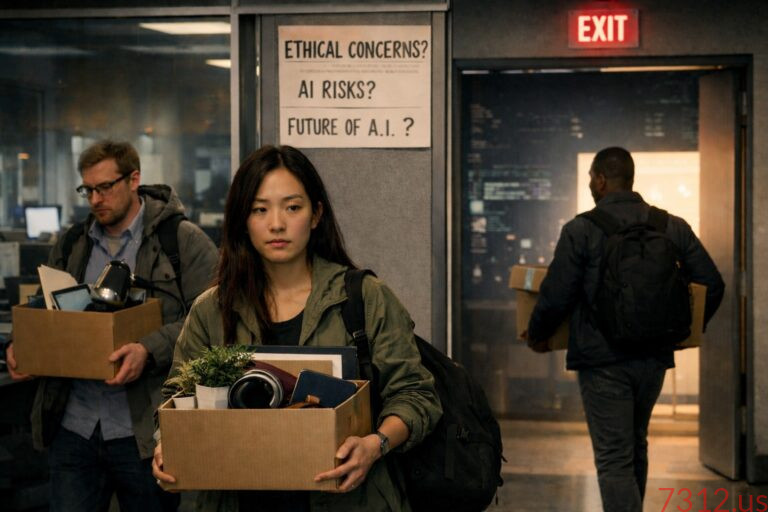
- The Death of Entry-Level Roles: The biggest risk isn’t the senior partner being replaced; it’s the “apprenticeship” roles (junior associates, analysts) being automated. This creates a “talent gap” where there is no one being trained to fill senior roles in the future.
- Economic Dislocation: A 12–18 month window is faster than any historical labor market adjustment. If millions of roles are disrupted simultaneously, the pressure on social safety nets would be unprecedented, potentially leading to the “K-shaped” economic divergence Suleyman’s critics fear.
Conclusion
Suleyman’s prediction serves as a provocation rather than a prophecy. While he is likely correct that the capability to automate these tasks will exist by 2027, the implementation will likely take a decade.
The true value of his statement is as a “tactical alarm”: it forces boards and policymakers to treat AI not as a distant “sometime” problem, but as a “this quarter” priority. However, by collapsing the distinction between “AI can do this” and “AI will do this,” Suleyman risks overpromising a frictionless future that ignores the messy, human reality of how business actually works.